CAS 25680-59-5
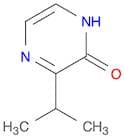
:3-(1-Methylethyl)-2(1H)-pyrazinone
Description:
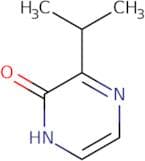
3-(1-Methylethyl)-2(1H)-pyrazinone, also known by its CAS number 25680-59-5, is an organic compound characterized by its pyrazinone structure, which features a five-membered ring containing two nitrogen atoms. This compound typically exhibits a pale yellow to light brown appearance and is soluble in organic solvents. Its molecular structure includes an isopropyl group, contributing to its unique chemical properties. The presence of the pyrazinone moiety suggests potential applications in pharmaceuticals, agrochemicals, or as a building block in organic synthesis due to its ability to participate in various chemical reactions. Additionally, compounds of this class may exhibit biological activity, making them of interest in medicinal chemistry. The stability and reactivity of 3-(1-Methylethyl)-2(1H)-pyrazinone can be influenced by factors such as pH and temperature, which are important considerations in its handling and application. Overall, this compound represents a versatile structure with potential utility in various chemical and industrial applications.
Formula:C7H10N2O
InChI:InChI=1S/C7H10N2O/c1-5(2)6-7(10)9-4-3-8-6/h3-5H,1-2H3,(H,9,10)
InChI key:InChIKey=DZWQRZCJQHBJRI-UHFFFAOYSA-N
SMILES:C(C)(C)C=1C(=O)NC=CN1
Synonyms:- 2(1H)-Pyrazinone, 3-(1-methylethyl)-
- 3-(1-Methylethyl)-2(1H)-pyrazinone
- 3-(propan-2-yl)pyrazin-2(1H)-one
- 3-Isopropylpyrazin-2-Ol
- Pyrazinol, 3-isopropyl-
- 3-Isopropyl-(1H)-pyrazin-2-one
Sort by
Purity (%)
0
100
|
0
|
50
|
90
|
95
|
100
Found 3 products.
3-isopropylpyrazin-2-ol
CAS:3-isopropylpyrazin-2-ol is a volatile and catalytic compound that is used in the synthesis of methylated flavonols such as quercetin. It is a hydroxypyrazine that can be synthesized from the amino acid isobutylamine. 3-isopropylpyrazin-2-ol has been shown to inhibit o-methyltransferases and flavonol quercetin biosynthesis in tissues, and can be used for the production of other derivatives. This compound has also been shown to inhibit e coli growth, which may be due to its ability to inhibit enzymes involved in bacterial DNA replication.
Formula:C7H10N2OPurity:Min. 95%Molecular weight:138.17 g/molRef: 3D-ABA68059
Discontinued product