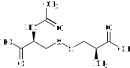
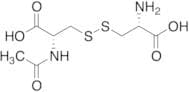
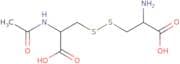
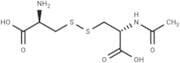
CAS 25779-79-7
:N-acetylcystine
Description:
N-acetylcysteine (NAC) is a derivative of the amino acid cysteine, characterized by the addition of an acetyl group to the nitrogen atom of the cysteine side chain. It is commonly recognized for its role as a mucolytic agent, helping to break down mucus in respiratory conditions, and as an antioxidant, due to its ability to replenish intracellular levels of glutathione. NAC is soluble in water and has a slightly bitter taste. It is often used in clinical settings to treat acetaminophen overdose and to alleviate symptoms of chronic obstructive pulmonary disease (COPD) and cystic fibrosis. Additionally, NAC has been studied for its potential benefits in psychiatric disorders and as a supplement for overall health. Its mechanism of action involves the reduction of oxidative stress and modulation of inflammatory pathways. While generally considered safe, it may cause side effects such as gastrointestinal discomfort in some individuals. As with any supplement or medication, it is important to consult healthcare professionals before use.
Formula:C8H14N2O5S2
InChI:InChI=1/C8H14N2O5S2/c1-4(11)10-6(8(14)15)3-17-16-2-5(9)7(12)13/h5-6H,2-3,9H2,1H3,(H,10,11)(H,12,13)(H,14,15)
SMILES:CC(=NC(CSSCC(C(=O)O)N)C(=O)O)O
Synonyms:- cystine, N-acetyl-
- N-Acetylcystine
Sort by
Purity (%)
0
100
|
0
|
50
|
90
|
95
|
100
Found 5 products.
Mono-N-Acetyl-L-Cystine
CAS:Formula:C8H14N2O5S2Color and Shape:White To Off-White SolidMolecular weight:282.33N-Acetyl-L-cystine
CAS:Controlled ProductApplications N-Acetyl-L-cystine is an antioxidant, used in the treatment of influenza A virus pandemic (1). N-Acetyl-L-cystine promotes fertilization by reducing disulfide bonds in zona pellucida of mouse (2).Releases N-Acetyl-L-cysteine, which is an antidote for paracetamol poisoning.
References (1) Zhang, R., et al.: (2014) Int. Immunopharmacol. 22: 1-8 (2) Takeo, T., et al.: Biol Reprod. (2015) 92: 1-7Formula:C8H14N2O5S2Color and Shape:NeatMolecular weight:282.34N-Acetyl-L-cystine
CAS:N-Acetyl-L-cystine is a water soluble amino acid that has been approved for treatment of cystic fibrosis in adults and children older than six years. It is available as an aerosol, nebulized solution or oral capsule. N-Acetyl-L-cystine has been shown to have a protective effect against influenza virus (Virus A) infection by reducing the proinflammatory cytokines and reactive oxygen species in response to the virus. This drug also reduces the severity of symptoms associated with influenza virus infection. The pharmacokinetic properties of this drug are well understood, as it is stable in vivo, crosses the blood brain barrier, and does not bind to serum proteins.Formula:C8H14N2O5S2Purity:Min. 95%Molecular weight:282.3 g/molN-Monoacetylcystine
CAS:N-Monoacetylcystine is a paracetamol poisoning antidote. It is used in the treatment of influenza A virus pandemic.Formula:C8H14N2O5S2Purity:98%Color and Shape:SolidMolecular weight:282.34