CAS 26089-54-3
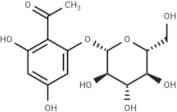
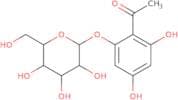
:2-acetyl-3,5-dihydroxyphenyl beta-D-glucopyranoside
Description:
2-Acetyl-3,5-dihydroxyphenyl beta-D-glucopyranoside, with the CAS number 26089-54-3, is a glycoside compound characterized by its structural components, which include a phenolic moiety and a glucose unit. This compound features an acetyl group and two hydroxyl groups on the aromatic ring, contributing to its potential biological activity. The beta-D-glucopyranoside part indicates that the glucose is in a pyranose form and is linked to the phenolic structure through a glycosidic bond. This compound is often studied for its antioxidant properties and potential health benefits, as phenolic compounds are known for their ability to scavenge free radicals. Additionally, the presence of the acetyl group may influence its solubility and reactivity. In terms of physical properties, it is typically a solid at room temperature and may exhibit solubility in polar solvents. Its applications can extend to food science, pharmacology, and natural product chemistry, where it may serve as a lead compound for further research into therapeutic agents.
Formula:C14H18O9
InChI:InChI=1/C14H18O9/c1-5(16)10-7(18)2-6(17)3-8(10)22-14-13(21)12(20)11(19)9(4-15)23-14/h2-3,9,11-15,17-21H,4H2,1H3/t9-,11-,12+,13-,14-/m1/s1
Sort by
Purity (%)
0
100
|
0
|
50
|
90
|
95
|
100
Found 3 products.
Ethanone, 1-[2-(β-D-glucopyranosyloxy)-4,6-dihydroxyphenyl]-
CAS:Formula:C14H18O9Purity:98.0%Molecular weight:330.2873Myrciaphenone A
CAS:Myrciaphenone A is a natural product from Limoniastrum feei (Girard) Batt.Formula:C14H18O9Purity:98%Color and Shape:SolidMolecular weight:330.29Myrciaphenone A
CAS:Myrciaphenone A is a natural compound, which is isolated from the Myrcia genus of plants. These plants are native to tropical regions and are known for their diverse range of biologically active compounds. Myrciaphenone A exhibits its mode of action through antimicrobial activity, making it effective against a variety of bacterial strains. This activity is believed to be a result of its ability to disrupt bacterial cell membranes or interfere with essential bacterial metabolic pathways.
Formula:C14H18O9Purity:Min. 95%Molecular weight:330.29 g/mol
![Ethanone, 1-[2-(β-D-glucopyranosyloxy)-4,6-dihydroxyphenyl]-](/_next/image/?url=https%3A%2Fstatic.cymitquimica.com%2Fproducts%2FIN%2Fthumb%2FDA002RMC.jpg&w=3840&q=75)