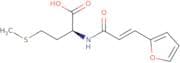
![L-Methionine, N-[(2E)-3-(2-furanyl)-1-oxo-2-propenyl]-](/_next/image/?url=https%3A%2Fstatic.cymitquimica.com%2Fcas-image%2Fthumb-webp%2F336970-l-methionine-n-2e-3-2-furanyl-1-oxo-2-propenyl.webp&w=3840&q=75)
CAS 261179-09-3
:L-Methionine, N-[(2E)-3-(2-furanyl)-1-oxo-2-propenyl]-
FA-Met-OH
CAS:FA-Met-OH is a synthetic substrate that can be used to study the biological function of metalloenzymes in plants. This substrate is a synthetic analogue of the natural substrate, which is found in the brassicaceae family (e.g., Arabidopsis thaliana). The enzyme kinetics and inhibitory effects of FA-Met-OH have been studied using mercuric chloride and chloride as inhibitors. Mercuric chloride has been shown to have an inhibitory effect on phosphatase activity, whereas chloride inhibits the activities of both phosphatases and proteases. The pH optimum for this substrate is at 7.5, which may be due to its high affinity for phosphate groups. This substrate has also been shown to be localized in porcine kidney cells, but not in human cells. The amino acid composition of FA-Met-OH is similar to that of histidine, with a few differences such as additional methionine and serine residues. Immuno
Formula:C12H15NO4SPurity:Min. 95%Molecular weight:269.32 g/mol