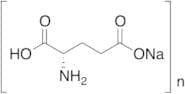
CAS 26247-79-0
:Sodium polyglutamate
Description:
Sodium polyglutamate is a biopolymer derived from the amino acid glutamic acid, characterized by its high molecular weight and water-soluble properties. It is a sodium salt of polyglutamic acid, which consists of repeating units of glutamic acid linked by peptide bonds. This substance is known for its ability to retain moisture, making it a popular ingredient in cosmetic and skincare formulations, where it acts as a humectant and skin-conditioning agent. Additionally, sodium polyglutamate exhibits biocompatibility and biodegradability, which enhances its appeal in various applications, including food additives and pharmaceuticals. Its thickening and emulsifying properties also contribute to its use in food products, where it can improve texture and stability. Furthermore, sodium polyglutamate has been studied for its potential health benefits, including its role in enhancing nutrient absorption and promoting gut health. Overall, sodium polyglutamate is valued for its multifunctional properties across diverse industries, particularly in cosmetics, food, and health-related applications.
Formula:(C5H9NO4)x·xNa
InChI:InChI=1S/C5H9NO4.Na/c6-3(5(9)10)1-2-4(7)8;/h3H,1-2,6H2,(H,7,8)(H,9,10);/t3-;/m0./s1
InChI key:InChIKey=UVZZAUIWJCQWEO-DFWYDOINSA-N
SMILES:[C@H](CCC(O)=O)(C(O)=O)N.[Na]
Synonyms:- <span class="text-smallcaps">L</span>-Glutamic acid polymer sodium salt
- <span class="text-smallcaps">L</span>-Glutamic acid, homopolymer, sodium salt
- BioPGANa
- Glutamic acid homopolymer sodium salt
- Glutamic acid, <span class="text-smallcaps">L</span>-, peptides, sodium salt
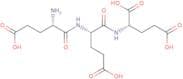
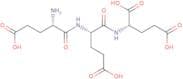
- L-alpha-glutamyl-L-alpha-glutamyl-L-glutamic acid
- Poly(<span class="text-smallcaps">L</span>-glutamic acid) sodium salt
- Poly(glutamic acid) sodium salt
- Poly(sodium glutamate)
- Poly(sodium α-<span class="text-smallcaps">L</span>-glutamate)
- Sigma P 4886
- Sodium poly(α-<span class="text-smallcaps">L</span>-glutamate)
- Sodium poly-<span class="text-smallcaps">L</span>-glutamate
- Sodium polyglutamate
- poly-L-glutamic acid sodium mol. wt.*1,500-3,000
- Sodium poly-L-glutamate
- Glutamic acid, L-, peptides, sodium salt
- Poly(L-glutamic acid) sodium salt
- See more synonyms
Sort by
Purity (%)
0
100
|
0
|
50
|
90
|
95
|
100
Found 4 products.
γ-Polyglutamic Acid Sodium Salt (Technical Grade)
CAS:Controlled ProductStability Hygroscopic
Applications gamma-Polyglutamic acid - sodium salt (cas# 25513-46-6) is a useful research chemical.Formula:(C5H8NNaO4)nColor and Shape:NeatMolecular weight:NAPoly-L-glutamic acid sodium, MW 50,000-100,000
CAS:Poly-L-glutamic acid sodium, MW 50,000-100,000 is a treatment agent that belongs to the group of oligopeptides. It is a low-dose therapeutic agent for the treatment of hair loss and alopecia. The amino acid sequence of this product has been shown to be similar to that of methionine and contains carboxyl groups. Poly-L-glutamic acid sodium, MW 50,000-100,000 is formed by the deprotonation and protonation of amino groups and carboxyl groups in an acidic environment.Formula:(C5H9NO4)x•NaxPurity:Min. 95%Color and Shape:PowderPoly-L-glutamic acid sodium salt - Average MW 30,000
CAS:Poly-L-glutamic acid sodium salt (PGA) is a low-dose, methionyl, glutamic, oligopeptide that contains glutamic acid and sequence. It is a treatment agent for follicle stimulating hormone deficiency and prostate cancer. PGA has been shown to reduce prostate size in men with benign prostatic hyperplasia. This drug is also used as an adjuvant therapy in the treatment of osteoporosis by reducing bone resorption. The carboxyl group of PGA reacts with amino acids on the surface of cells to form a covalent bond that can be degraded by enzymes called proteases. The deprotonated amino groups are able to bind to the amino acid side chains on proteins and disrupt their function.Formula:(C5H9NO4)x·xNaColor and Shape:PowderPoly-L-Glutamic Acid Sodium Salt
CAS:Poly-L-glutamic acid sodium salt (PGA) is a biodegradable polymer that can be used as a tissue sealant or to deliver drugs to specific sites in the body. It is also used in wound healing and in the treatment of inflammatory skin conditions such as psoriasis. PGA has been shown to stimulate antibody production, which may be due to its ability to act as an adjuvant for the formation of antibodies. This polymer has been shown to have a positive effect on diastolic and systolic blood pressure levels. PGA has also been shown to have a role in improving disease activity, with some evidence suggesting it may play a role in atrial fibrillation and cardiac function.Formula:(C5H9NO4)x·XNaPurity:Min. 95%