CAS 26271-75-0
:4-amino-3,5-dichlorophenol
Description:
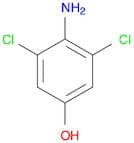
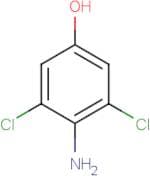
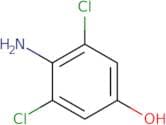
4-Amino-3,5-dichlorophenol is an organic compound characterized by the presence of an amino group (-NH2) and two chlorine substituents on a phenolic ring. Its molecular structure features a phenol group with chlorine atoms positioned at the 3 and 5 positions relative to the amino group at the 4 position. This compound is typically a solid at room temperature and may appear as a crystalline or powdery substance. It is known for its potential applications in the synthesis of dyes, pharmaceuticals, and as a reagent in various chemical reactions. The presence of chlorine atoms contributes to its reactivity and may influence its solubility in different solvents. Additionally, 4-amino-3,5-dichlorophenol may exhibit biological activity, making it of interest in medicinal chemistry. Safety precautions should be taken when handling this compound, as it may pose health risks, including skin and respiratory irritation. Proper storage and disposal methods are essential to mitigate environmental impact and ensure safety in laboratory settings.
Formula:C6H5Cl2NO
InChI:InChI=1/C6H5Cl2NO/c7-4-1-3(10)2-5(8)6(4)9/h1-2,10H,9H2
SMILES:c1c(cc(c(c1Cl)N)Cl)O
Synonyms:- 3,5-Dichloro-4-aminophenol
- 3,5-Dichloro-p-aminophenol
- Phenol, 4-amino-3,5-dichloro-
- 3,5-dichloro-1,4-aminophenol
- 4-Amino-3,5-dichlorophenol
- Lenvatinib Impurity 93
Sort by
Purity (%)
0
100
|
0
|
50
|
90
|
95
|
100
Found 3 products.
Phenol, 4-amino-3,5-dichloro-
CAS:Formula:C6H5Cl2NOPurity:95%Color and Shape:SolidMolecular weight:178.01604-Amino-3,5-dichlorophenol
CAS:4-Amino-3,5-dichlorophenolPurity:95%Color and Shape:SolidMolecular weight:178.02g/mol4-Amino-3,5-dichlorophenol
CAS:4-Amino-3,5-dichlorophenol is a decoupling agent that has been shown to have acute toxicities in cultures. It is also used as a regulatory control for the analysis of hydroxyl groups and for broad-spectrum antimicrobial agents. 4-Amino-3,5-dichlorophenol reacts with hydrochloric acid to form chlorohydrin, which can be detected by an electrochemical detector. This reaction mechanism has been proposed as the basis for the use of this chemical as a decoupling agent in analytical chemistry. Its use as an antimicrobial agent is based on its ability to inhibit bacterial growth by reacting with thiol groups in enzymes or proteins and blocking their activity.
Formula:C6H5Cl2NOPurity:Min. 95%Color and Shape:PowderMolecular weight:178.02 g/mol