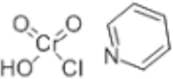
CAS 26299-14-9
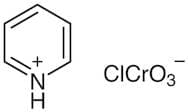
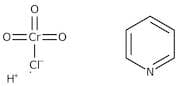
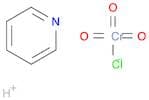
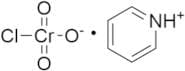
:Pyridinium chlorochromate
- Chromate(1-), chlorotrioxo-, (T-4)-, hydrogen, compd. with pyridine (1:1)
- Chromate(1-), chlorotrioxo-, (T-4)-, hydrogen, compd. with pyridine (1:1:1)
- Chromate(1-), chlorotrioxo-, hydrogen, compd. with pyridine (1:1)
- Chromium, Trioxo-, Chloride, Hydrogen Salt, Compd. With Pyridine (1:1:1)
- Corey reagent
- Corey's reagent
- Corey's reagent (oxidation reagent)
- PCC
- PCC (oxidizing agent)
- Pyridine, (T-4)-chlorotrioxochromate(1-)
- Pyridine, chlorotrioxochromate(1-)
- Pyridine, trioxochlorochromate(VI)
- Pyridinium Chloro(Oxido)Dioxochromium
- Reagents, Corey's
- Urine Luck
- PYRIDINIUM CHLOROCHROMATE
- Pyridinium Chlorochromate 99%
- Pyridiniumchlorochromate,98%
- pyridinium
- PYRIDINIUM CHLOROCHROMATE, CA. 20 WT. % ON BASIC ALUMINA
- Pyridine·chlorochromic acid
- Pyridinium chlorochromate, PCC
- PyridiniumChlirochromate
- Chromate(1-), chlorotrioxo-, (T-4)-, hydrogen, compound with pyridine (1:1)
- PyridiniumChlorochromate99%
- chromate(1-),chlorotrioxo-,(beta-4)-,hydrogen,compd.withpyridine(1:1)
- See more synonyms
Pyridinium Chlorochromate
CAS:Formula:C5H6N·ClCrO3Purity:>98.0%(T)Color and Shape:Light yellow to Yellow to Orange powder to crystalMolecular weight:215.55Pyridinium chlorochromate, 98%
CAS:Pyridinium chlorochromate is used as an oxidizing agent to convert primary and secondary alcohols to aldehydes and ketones respectively. It is involved in the preparation of cyclohexanone, (-)-pulegone and lactones. It plays an important role in the selective mono-oxidation of xylenes to tolualdehydFormula:C5H6ClCrNO3Purity:98%Color and Shape:Crystals or powder or crystalline powder, OrangeMolecular weight:215.55chlorochromiumoylol; pyridine
CAS:Formula:C5H6ClCrNO3Purity:98%Color and Shape:SolidMolecular weight:215.5551Pyridinium chlorochromate
CAS:Pyridinium chlorochromate
Formula:C5H6N·ClCrO3Purity:98%Color and Shape: orange powderMolecular weight:215.56g/molPyridinium Chlorochromate
CAS:Controlled ProductApplications Pyridinium Chlorochromate is used in the synthesis of potent antitumor antibiotics and agents.
Not a dangerous good if item is equal to or less than 1g/ml and there is less than 100g/ml in the package
References Hurley, L. et al.: Chem. Res. Toxicol., 1, 258 (1988);Formula:C5H5N·ClCrO3·HColor and Shape:NeatMolecular weight:215.56Pyridinium chlorochromate
CAS:Formula:C5H8ClCrNO3Purity:98.0%Color and Shape:SolidMolecular weight:217.57Pyridinium Chlorochromate (PCC) extrapure, 98%
CAS:Formula:C5H6NClCrO3Purity:min. 98%Color and Shape:Orange to reddish - brown, PowderMolecular weight:215.56Pyridinium chlorochromate
CAS:Pyridinium chlorochromate or PCC is a pyridine-based chemical compound, which is used as a chemical reagent in organic synthesis. It is a reagent for the acetylation of phenols and an oxidation agent for alcohols and amines. In tumor cell biology, PCC has been shown to inhibit tumor growth by inducing apoptosis through activation of caspase 3 and upregulation of AIF (apoptosis-inducing factor). It has also shown to inhibit the growth of C. glabrata, a plant extract, in vitro. Pyridinium chlorochromate also reacts with glucose to form a condensation product, which can be detected by optical density measurements at 400 nm. The anticancer effect is based on the condensation reaction between glucose and acid chlorides, which produces benzyl ethers with aldehyde groups. These substances are cytotoxic to tumor cells because they bind to ribosomal DNA. It also causes ATP leakage from cells by altering calcium hydroxide equilibrium. Pyridinium chlorochromate studies are currently investigating its use as an adjunct therapy for lung cancer patients with adenosine triphosphate levels below 50% of normal values.
Formula:C5H6ClCrNO3Purity:Min. 95%Color and Shape:PowderMolecular weight:215.55 g/mol