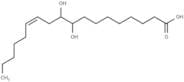
CAS 263399-34-4
:12-Octadecenoic acid,9,10-dihydroxy-, (12Z)-
Description:
12-Octadecenoic acid, 9,10-dihydroxy-, (12Z)-, also known as a specific form of hydroxy fatty acid, is characterized by its long carbon chain, which consists of 18 carbon atoms with a double bond located at the 12th position, indicating it is an unsaturated fatty acid. The presence of hydroxyl groups at the 9th and 10th positions contributes to its unique properties, including increased polarity and potential for hydrogen bonding, which can influence its solubility and reactivity. This compound is typically found in various natural sources and may play roles in biological processes, such as signaling or structural functions in cell membranes. Its structure allows for potential applications in pharmaceuticals, cosmetics, and food industries, where it may be utilized for its emulsifying or moisturizing properties. Additionally, the specific stereochemistry indicated by the (12Z) designation suggests a cis configuration of the double bond, which can affect the compound's physical properties and biological activity.
Formula:C18H34O4
Synonyms:- 9,10-Dihydroxy-12Z-octadecenoicacid
Sort by
Purity (%)
0
100
|
0
|
50
|
90
|
95
|
100
Found 3 products.
threo-9,10-Dihydroxy-12(Z)-octadecenoic acid
CAS:Formula:C18H34O4Purity:>98%Color and Shape:In solution, EthanolMolecular weight:314.46(±)9(10)-DiHOME
CAS:(±)9(10)-DiHOME, the diol derivative of (±)9(10)-EpOME—a cytochrome P450-derived epoxide of linoleic acid also known as leukotoxin—is formed through the action of soluble epoxide hydrolase (sEH) in neutrophils. It exhibits toxicity towards Sf21 cells expressing sEH as well as tolacZ-expressing control cells, differing from leukotoxin which only harms sEH-containing cells. Furthermore, combined exposure to 9(10)- and 12(13)-DiHOME leads to cell death in rabbit renal proximal tubule cells by disrupting mitochondrial respiration, and causes lung injury, respiratory distress, and mortality in mice, highlighting its role as a toxic lipid mediator. Specifically, 9(10)-DiHOME has been associated with acute respiratory distress syndrome (ARDS), a severe and often deadly complication in patients with major burns. Elevated levels of this compound have been detected in the bronchoalveolar lavage fluid (BALF) of women, but not men, with chronic obstructive pulmonary disease (COPD), and its levels are also increased in patients with allergic asthma, indicating its significance in respiratory conditions.Formula:C18H34O4Color and Shape:SolidMolecular weight:314.5