CAS 26351-03-1
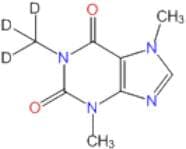
:1H-Purine-2,6-dione,3,7-dihydro-3,7-dimethyl-1-(methyl-d3)-
Description:
1H-Purine-2,6-dione, 3,7-dihydro-3,7-dimethyl-1-(methyl-d3)-, also known by its CAS number 26351-03-1, is a purine derivative characterized by its bicyclic structure, which includes a fused imidazole and pyrimidine ring. This compound features multiple methyl groups, contributing to its hydrophobic nature and influencing its solubility and reactivity. The presence of deuterium in the methyl-d3 group indicates that some hydrogen atoms are replaced with deuterium isotopes, which can be useful in studies involving isotopic labeling. The compound is likely to exhibit biological activity, as many purine derivatives are involved in cellular processes, including energy transfer and signaling. Its structural characteristics suggest potential applications in pharmaceuticals or biochemistry, particularly in the study of nucleic acids or as a building block for more complex molecules. Overall, this compound exemplifies the diverse chemistry of purines and their derivatives, which play crucial roles in various biological systems.
Formula:C8H7D3N4O2
Synonyms:- Caffeine-a1,a1,a1-d3 (8CI)
- 1-Trideuteromethyl-3,7-dimethylxanthine
Sort by
Purity (%)
0
100
|
0
|
50
|
90
|
95
|
100
Found 3 products.
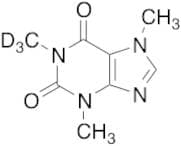
Caffeine-d3 (1-methyl-d3)
CAS:Controlled ProductApplications Caffeine-d3 (1-methyl-d3) (CAS# 26351-03-1) is a useful isotopically labeled research compound.
Formula:C8H7D3N4O2Color and Shape:NeatMolecular weight:197.2Caffeine-d3
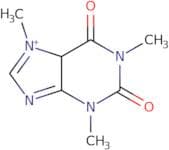
CAS:Caffeine-d3 is a cell-permeable analogue of caffeine that can be used as an internal standard for the quantification of caffeine in mammalian cells. Caffeine-d3 may also be used to measure the elimination rate of caffeine from animal tissues and to study the effect of matrix components on drug uptake. It may also be used to study the activity of hydroxyzine and theophylline, which is due to their structural similarity with caffeine. Caffeine-d3 is a fatty acid that can act as a cellular messenger through activation or inhibition of adenosinergic receptors.
Formula:C8H11N4O2Purity:Min. 95%Molecular weight:198.22 g/molRef: 3D-BBA35103
Discontinued product