CAS 26367-48-6
:3-Chlorocarbonylacrylic acid ethyl ester
Description:
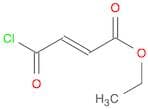
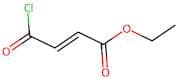
3-Chlorocarbonylacrylic acid ethyl ester, with the CAS number 26367-48-6, is an organic compound characterized by its functional groups, including a chlorinated carbonyl and an ester moiety. This compound typically appears as a colorless to pale yellow liquid and is known for its reactivity due to the presence of both the carbonyl and the double bond in the acrylic acid structure. It is soluble in organic solvents, making it useful in various chemical reactions, particularly in the synthesis of more complex molecules. The chlorinated carbonyl group can participate in nucleophilic addition reactions, while the acrylic acid component can undergo polymerization. This compound may be utilized in the production of agrochemicals, pharmaceuticals, or as an intermediate in organic synthesis. Safety considerations include handling it in a well-ventilated area and using appropriate personal protective equipment, as it may pose health risks upon exposure. Overall, 3-Chlorocarbonylacrylic acid ethyl ester is a versatile compound with significant applications in chemical synthesis.
Formula:C6H7ClO3
InChI:InChI=1/C6H7ClO3/c1-2-10-6(9)4-3-5(7)8/h3-4H,2H2,1H3/b4-3+
Synonyms:- (E)-4-Chloro-4-oxo-2-butenoic acid ethyl ester
- ethyl (2E)-4-chloro-4-oxobut-2-enoate
Sort by
Purity (%)
0
100
|
0
|
50
|
90
|
95
|
100
Found 5 products.
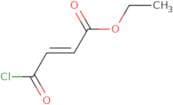
(E)-Ethyl 4-chloro-4-oxobut-2-enoate
CAS:Formula:C6H7ClO3Purity:97%Color and Shape:LiquidMolecular weight:162.5710Ethyl fumaroyl chloride
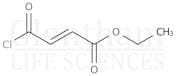
CAS:Ethyl fumaroyl chloride is an activating agent that can be used as an antibacterial or bacteriostatic agent. Ethyl fumaroyl chloride is active against a variety of bacteria, including strains that are resistant to other antibiotics. The inhibitory effect of ethyl fumaroyl chloride is due to the presence of chlorine in its structure. This substance has been shown to be effective against human cancer cells and may be a potential treatment for cancer. It also has organocatalytic properties and can be used in organic synthesis, making it a versatile chemical.
Formula:C6H7ClO3Purity:Min. 95%Molecular weight:162.57 g/mol