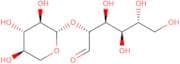
CAS 26388-68-1
:Sambubiose
Description:
Sambubiose is a disaccharide composed of two sugar units, specifically glucose and rhamnose, linked by a glycosidic bond. It is derived from the flowers and fruits of the elderberry plant (Sambucus species), which is known for its medicinal properties. Sambubiose is characterized by its sweet taste and potential health benefits, including antioxidant and anti-inflammatory effects. It is soluble in water, making it easily absorbed in biological systems. The substance has garnered interest in food science and pharmacology due to its natural origin and potential applications in dietary supplements and functional foods. Additionally, sambubiose may play a role in the fermentation processes of certain microorganisms, contributing to the production of bioactive compounds. As with many natural sugars, its stability can be influenced by environmental factors such as temperature and pH. Overall, sambubiose represents a fascinating area of study within carbohydrate chemistry and its applications in health and nutrition.
Formula:C11H20O10
InChI:InChI=1S/C11H20O10/c12-1-4(14)7(16)9(18)6(2-13)21-11-10(19)8(17)5(15)3-20-11/h2,4-12,14-19H,1,3H2/t4-,5-,6+,7-,8+,9-,10-,11+/m1/s1
InChI key:InChIKey=PVKZAQYUEVYDGV-VFSNRJELSA-N
SMILES:O([C@H]([C@H]([C@@H]([C@@H](CO)O)O)O)C=O)[C@H]1[C@H](O)[C@@H](O)[C@H](O)CO1
Synonyms:- 2-O-β-<span class="text-smallcaps">D</smallcap>-Xylopyranosyl-<smallcap>D</span>-glucose
- <span class="text-smallcaps">D</smallcap>-Glucose, 2-O-β-<smallcap>D</span>-xylopyranosyl-
- Sambubiose
- Sambubiose(6CI)
- 2-O-β-D-Xylopyranosyl-D-glucose
- D-Glucose, 2-O-β-D-xylopyranosyl-
Sort by
Purity (%)
0
100
|
0
|
50
|
90
|
95
|
100
Found 1 products.
Sambubiose
CAS:Sambubiose is a flavonol glycoside that is found in the lacrimal gland of rabbits. It has been used as a dietary supplement and is said to be synthesized by hydrolysis of the starch-bound glucose disaccharides, maltose and maltotriose. Sambubiose is not readily absorbed by the gastrointestinal tract, which may be due to its low solubility in water and acidic pH. It is also poorly absorbed because it contains a glycosidic bond and a non-reducing terminal sugar group. Sambubiose can be detected by nuclear magnetic resonance spectroscopy at 1.5 ppm for the methylene protons from the OH group of the glycosidic bond. The chemical shift at 2.7 ppm corresponds to the methylene protons from the hydroxyl group on malonic acid (a component of sambubiose).Formula:C11H20O10Purity:Min. 95%Molecular weight:312.27 g/mol