CAS 26456-59-7
:pyrimidin-5-ol
Description:
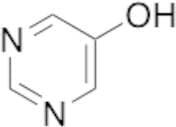
Pyrimidin-5-ol, with the CAS number 26456-59-7, is a heterocyclic organic compound characterized by a pyrimidine ring that features a hydroxyl (-OH) group at the 5-position. This compound is part of the pyrimidine family, which consists of a six-membered ring containing two nitrogen atoms at the 1 and 3 positions. Pyrimidin-5-ol exhibits properties typical of both aromatic compounds and alcohols, including potential hydrogen bonding due to the hydroxyl group. It is generally soluble in polar solvents, such as water and alcohols, while exhibiting limited solubility in non-polar solvents. The presence of the hydroxyl group can influence its reactivity, making it a potential candidate for various chemical reactions, including nucleophilic substitutions and condensation reactions. Pyrimidin-5-ol may also serve as a building block in the synthesis of pharmaceuticals and agrochemicals, given the biological significance of pyrimidine derivatives. Its structural features and functional groups contribute to its utility in organic synthesis and medicinal chemistry.
Formula:C4H4N2O
InChI:InChI=1/C4H4N2O/c7-4-1-5-3-6-2-4/h1-3,7H
SMILES:c1c(cncn1)O
Synonyms:- 5-Hydroxypyrimidine
- 5-Pyrimidinol
- 5-Hydroxypyrimidine.AcOH salt
Sort by
Purity (%)
0
100
|
0
|
50
|
90
|
95
|
100
Found 5 products.
5-Hydroxypyrimidine
CAS:5-HydroxypyrimidineFormula:C4H4N2OPurity:≥95%Color and Shape: brown powderMolecular weight:96.09g/mol5-Hydroxypyrimidine
CAS:5-Hydroxypyrimidine is a pharmacological agent that is used to enhance the elimination of drugs in humans. It is also used as a reagent for the detection of reactive metabolites and for the preparation of monoclonal antibodies. 5-Hydroxypyrimidine has been shown to have anticancer activity and to inhibit cellular proliferation by inducing DNA strand breaks. 5-Hydroxypyrimidine has also been shown to interfere with the synthesis of RNA, which leads to cell death. This drug may also have a role in treating cancer by inhibiting protein synthesis, which can lead to cell death.
Formula:C4H4N2OPurity:Min. 95%Molecular weight:96.09 g/mol