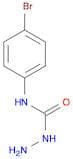
CAS 2646-26-6
:Hydrazinecarboxamide, N-(4-bromophenyl)-
Description:
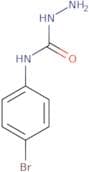
Hydrazinecarboxamide, N-(4-bromophenyl)-, also known by its CAS number 2646-26-6, is an organic compound characterized by the presence of a hydrazine functional group and a carboxamide moiety, with a bromophenyl substituent. This compound typically appears as a crystalline solid and is soluble in polar solvents due to its ability to form hydrogen bonds. The presence of the bromine atom in the para position of the phenyl ring enhances its reactivity and can influence its biological activity, making it of interest in medicinal chemistry. Hydrazine derivatives are known for their applications in various fields, including agriculture, pharmaceuticals, and as intermediates in organic synthesis. The compound may exhibit properties such as potential antimicrobial or anticancer activity, although specific biological effects would depend on further empirical studies. Safety considerations are important, as hydrazine derivatives can be toxic and require careful handling. Overall, N-(4-bromophenyl)hydrazinecarboxamide represents a versatile structure in organic chemistry with potential applications in various scientific domains.
Formula:C7H8BrN3O
Sort by
Purity (%)
0
100
|
0
|
50
|
90
|
95
|
100
Found 3 products.
3-Amino-1-(4-bromophenyl)urea
CAS:3-Amino-1-(4-bromophenyl)urea (3ABPU) is a phenylurea compound that has been shown to have broad-spectrum pharmacological properties. 3ABPU is a potent inhibitor of tetrazole, which is involved in the synthesis of DNA and RNA. This inhibition results in an increase in the number of cells with chromosomal aberrations. 3ABPU also inhibits isatin, which is involved in the synthesis of protein and nucleic acid. It has been shown to be effective against carbamazepine and phenobarbital, two drugs used for the treatment of epilepsy and seizures. 3ABPU has also been shown to have anticonvulsant effects when administered intraperitoneally or orally. 3ABPU has been shown to cause neurotoxicity when given intraperitoneally, but not orally. Pharmacokinetic studies have indicated that it can be detected in cerebrospinal fluid following intraperitoneFormula:C7H8N3OBrPurity:Min. 95%Molecular weight:230.06 g/mol