CAS 2646-35-7
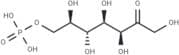
:Sedoheptulose, 7-phosphate
Description:
Sedoheptulose 7-phosphate is a phosphorylated sugar molecule that plays a significant role in various metabolic pathways, particularly in the pentose phosphate pathway and the Calvin cycle in plants. It is a seven-carbon sugar (heptose) with a phosphate group attached to the seventh carbon, which is crucial for its biochemical functions. This compound is involved in the synthesis of ribulose bisphosphate, a key molecule in carbon fixation during photosynthesis. Sedoheptulose 7-phosphate is also important in the regulation of metabolic processes, influencing the balance between carbohydrate metabolism and energy production. Its structure allows it to participate in various enzymatic reactions, making it a vital intermediate in cellular metabolism. The compound is typically found in biological systems and can be synthesized in the laboratory for research purposes. Its CAS number, 2646-35-7, is used for identification in chemical databases and regulatory contexts. Overall, sedoheptulose 7-phosphate is essential for understanding metabolic pathways in both plants and microorganisms.
Formula:C7H15O10P
InChI:InChI=1S/C7H15O10P/c8-1-3(9)5(11)7(13)6(12)4(10)2-17-18(14,15)16/h4-8,10-13H,1-2H2,(H2,14,15,16)/t4-,5-,6-,7+/m1/s1
InChI key:InChIKey=JDTUMPKOJBQPKX-GBNDHIKLSA-N
SMILES:[C@@H]([C@@H]([C@@H](COP(=O)(O)O)O)O)([C@@H](C(CO)=O)O)O
Synonyms:- Sedoheptulose, 7-(dihydrogen phosphate)
- Sedoheptulose, 7-phosphate
- D-altro-2-Heptulose, 7-(dihydrogen phosphate)
Sort by
Purity (%)
0
100
|
0
|
50
|
90
|
95
|
100
Found 3 products.
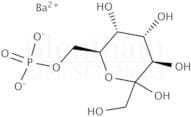
D-Sedoheptulose 7-phosphate
CAS:D-Sedoheptulose 7-phosphate, a precursor to group III heptaic acid and group IV hygromycin B, converts to NDP-heptose via similar pathways.Formula:C7H15O10PPurity:98%Color and Shape:SolidMolecular weight:290.16D-Sedoheptulose 7-phosphate lithium
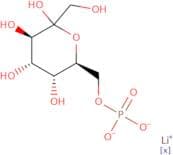
CAS:D-Sedoheptulose 7-phosphate lithium (DSDP) is a substance that is used in the synthesis of ribulose. It provides the carbonyl group for the synthesis of acetyl-CoA and plays an important role in energy metabolism. DSDP has been shown to be effective against streptococcus faecalis, which may be due to its ability to inhibit protein synthesis by binding to ribulose phosphates, thereby preventing the production of ATP. DSDP also inhibits cellular transformation, which may be due to its ability to bind with DNA and block RNA synthesis. In vitro studies have shown that DSDP can inhibit both Streptococcus faecalis and Escherichia coli at concentrations below 10 mM. These effects are likely mediated by enzymatic activities that are involved in bacterial cell physiology.Formula:C7H15O10P•(Li)xPurity:Min. 95%Color and Shape:PowderMolecular weight:290.16 g/mol