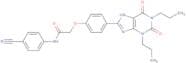
CAS 264622-58-4
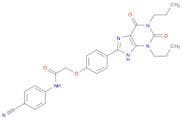
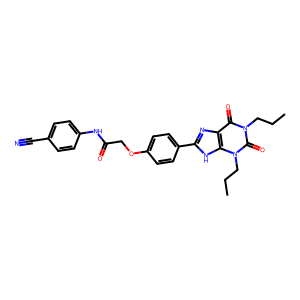
:N-(4-Cyanophenyl)-2-[4-(2,6-dioxo-1,3-dipropyl-2,3,6,7-tetrahydro-1H-purin-8-yl)phenoxy]acetamide
Description:
N-(4-Cyanophenyl)-2-[4-(2,6-dioxo-1,3-dipropyl-2,3,6,7-tetrahydro-1H-purin-8-yl)phenoxy]acetamide, with CAS number 264622-58-4, is a synthetic organic compound characterized by its complex structure, which includes a cyanophenyl group and a phenoxyacetamide moiety. This compound features a purine derivative that contributes to its biological activity, potentially influencing its interaction with various biological targets. The presence of the dioxo group suggests that it may exhibit significant reactivity and stability under certain conditions. Its molecular structure indicates potential applications in medicinal chemistry, particularly in the development of pharmaceuticals targeting specific pathways or diseases. The compound's solubility, stability, and reactivity can vary based on environmental conditions such as pH and temperature. Additionally, its pharmacological properties would need to be evaluated through experimental studies to determine its efficacy and safety profile in biological systems. Overall, this compound represents a class of molecules that may hold promise in therapeutic applications, particularly in the realm of targeted drug design.
Formula:C26H26N6O4
Synonyms:- Mrs-1754
Sort by
Purity (%)
0
100
|
0
|
50
|
90
|
95
|
100
Found 5 products.
Acetamide, N-(4-cyanophenyl)-2-[4-(2,3,6,9-tetrahydro-2,6-dioxo-1,3-dipropyl-1H-purin-8-yl)phenoxy]-
CAS:Formula:C26H26N6O4Purity:98%Color and Shape:SolidMolecular weight:486.5224N-(4-cyanophenyl)-2-[4-(2,6-dioxo-1,3-dipropyl-2,3,6,7-tetrahydro-1H-purin-8-yl)phenoxy]acetamide
CAS:Purity:98%Molecular weight:486.5320129MRS 1754
CAS:MRS 1754 is a drug that has been shown to have potential therapeutic value in the treatment of bowel disease. It is an antagonist of the toll-like receptor, which is a cell surface receptor that recognizes bacteria and other foreign substances and initiates an immune response. MRS 1754 has been shown to inhibit the activity of neuronal death in mammalian cells. The drug also binds to the cytosolic Ca2+ channel, which affects the function of neurotransmitter release from nerve terminals. MRS 1754 can cause drug interactions with other drugs by inhibiting their metabolism by cytochrome P450 enzymes or by competing for binding sites on plasma proteins. MRS 1754 has been shown to stimulate growth factor-β1 (GF-β1), which may be due to its ability to inhibit p2y receptors.Formula:C26H26N6O4Purity:Min. 95%Molecular weight:486.52 g/molMRS 1754
CAS:MRS 1754 is a selective antagonist radioligand for the A2B adenosine receptor. It has a very low affinity for A1 and A3 receptors of both humans and rats.
Formula:C26H26N6O4Purity:97.57% - 99.3%Color and Shape:SolidMolecular weight:486.52


![N-(4-cyanophenyl)-2-[4-(2,6-dioxo-1,3-dipropyl-2,3,6,7-tetrahydro-1H-purin-8-yl)phenoxy]acetamide](/_next/image/?url=https%3A%2Fstatic.cymitquimica.com%2Fproducts%2F10%2Fthumb%2FF865906.jpg&w=3840&q=75)