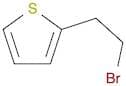
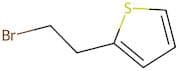
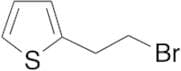
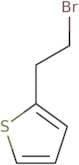
CAS 26478-16-0
:2,2-(Bromoethyl)-Thiophene
Description:
2,2-(Bromoethyl)-Thiophene, with the CAS number 26478-16-0, is an organic compound characterized by the presence of a thiophene ring, which is a five-membered aromatic heterocycle containing sulfur. This compound features a bromoethyl group attached to the thiophene, which can influence its reactivity and solubility. Typically, thiophene derivatives exhibit interesting electronic properties and can participate in various chemical reactions, including nucleophilic substitutions and polymerization processes. The presence of the bromine atom enhances its reactivity, making it a useful intermediate in organic synthesis. Additionally, compounds like 2,2-(Bromoethyl)-Thiophene may exhibit unique physical properties such as specific melting and boiling points, solubility in organic solvents, and potential applications in materials science, particularly in the development of conductive polymers or as building blocks in organic electronics. Safety considerations should be taken into account due to the presence of bromine, which can be hazardous. Overall, this compound represents a valuable entity in the field of organic chemistry and materials science.
Formula:C6H7BrS
Synonyms:- 2-(2-Bromoethyl)Thiophene
Sort by
Purity (%)
0
100
|
0
|
50
|
90
|
95
|
100
Found 6 products.
Thiophene, 2-(2-bromoethyl)-
CAS:Formula:C6H7BrSPurity:%Color and Shape:LiquidMolecular weight:191.08882-(2-Thienyl)ethyl Bromide
CAS:Stability Light and temperature sensitive
Applications 2-(2-Thienyl)ethyl Bromide is an halogenated thiophene derivative used in the synthesis of C8813, a potent analgesic.
References Liu, Z.H. et al.: Life Sci., 73, 233 (2003);Formula:C6H7BrSColor and Shape:ColourlessMolecular weight:191.092,2-(Bromoethyl)thiophene
CAS:Oripavine is a naturally occurring alkaloid that can be synthesized from 2,2-bromoethane and potassium carbonate. It has been used for the treatment of Parkinson's disease. Oripavine is an intermediate in the synthesis of rotigotine, a dopamine agonist used to treat Parkinson's disease. The reaction mechanism involves the addition of bromine to 2,2-bromoethane followed by hydrochloric acid treatment to form oripavine. The reaction proceeds with the formation of hydrogen chloride and potassium bromide. The product can then be reacted with a Grignard reagent or allyl group to produce rotigotine.Formula:C6H7BrSPurity:Min. 95%Molecular weight:191.09 g/mol