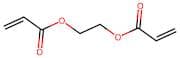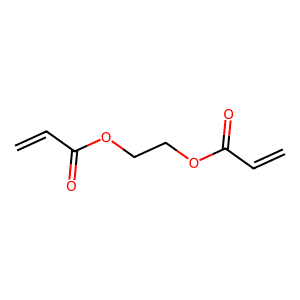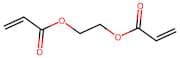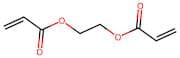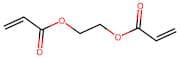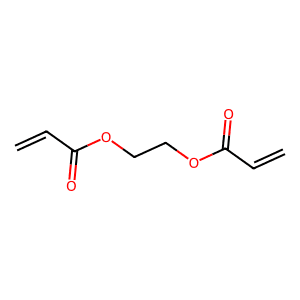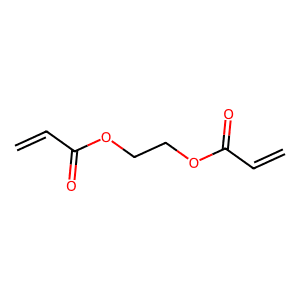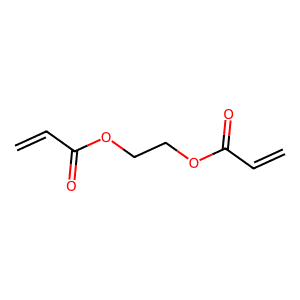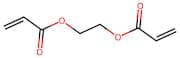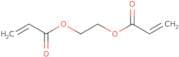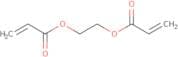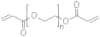
CAS 26570-48-9
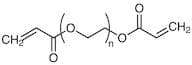
:Polyethylene glycol diacrylate
- 14Eg-A
- 4Eg-A
- 9Eg-A
- Extralink
- Pegda
- α-(Oxo-2-propenyl)-ω-[(1-oxo-2-propenyl)oxy]poly(oxy-1,2-ethanediyl)
- α-Acryloyl-ω-(acryloyloxy)poly(oxyethylene)
- Poly(oxy-1,2-ethanediyl), α-(1-oxo-2-propenyl)-ω-[(1-oxo-2-propenyl)oxy]-
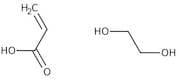
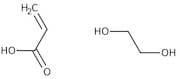
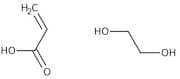
- prop-2-enoic acid - ethane-1,2-diol (1:1)
- Polyethylene glycol diacrylate
- Glycols, polyethylene, diacrylate
- Polyethylene glycol 1000 diacrylate
- Poly(oxy-1,2-ethanediyl), α-(1-oxo-2-propen-1-yl)-ω-[(1-oxo-2-propen-1-yl)oxy]-
- Acrylic acid, diester with polyethylene glycol
- See more synonyms
Polyethylene Glycol Diacrylate (n=approx. 14) (stabilized with MEHQ)
CAS:Color and Shape:Colorless to Almost colorless clear liquidPolyethylene Glycol Diacrylate (n=approx. 4) (stabilized with MEHQ)
CAS:Color and Shape:Colorless to Almost colorless clear liquidPolyethylene Glycol Diacrylate (n=approx. 9) (stabilized with MEHQ)
CAS:Color and Shape:Colorless to Light yellow clear liquidPolyethylene glycol diacrylate, M.W. 3,400
CAS:Polyethylene glycol diacrylate is used in dental compounds, offset inks, varnishes and flexible coatings. It widely used in various biomedical applications such as hydrogel development for drug delivery, tissue engineering, wound healing and electrospinning processes for bioapplication due to its no
Formula:C5H10O4Color and Shape:Off-white to light yellow, SolidMolecular weight:134.13Polyethylene glycol diacrylate, M.W. 8,000
CAS:Polyethylene glycol diacrylate is used to prepare photopolymerized hydrogels which are used as scaffolds for tissue regeneration and other biological applications. It acts as an important raw material for the synthesis of poly(ethylene glycol) urethane-dimethacrylates (PEGUDM) by reacting with 2-iso
Formula:C5H10O4Color and Shape:Pale yellow to pale cream, Granular solidMolecular weight:134.13Polyethylene glycol diacrylate, M.W. 1,000
CAS:PEGDA is used in dental compounds, offset inks, varnishes and flexible coatings. This Thermo Scientific Chemicals brand product was originally part of the Alfa Aesar product portfolio. Some documentation and label information may refer to the legacy brand. The original Alfa Aesar product / item code
Formula:C5H10O4Color and Shape:Off-white to cream to pale yellow, Viscous liquid or low melting solidMolecular weight:134.13Polyethylene Glycol Diacrylate
CAS:Polyethylene Glycol DiacrylatePurity:average Mn 6000, contains ≤1500 ppm MEHQ as inhibiα,ω-Diacryloyl Poly(Ethylene Glycol)
CAS:α,ω-Diacryloyl Poly(Ethylene Glycol)Purity:Mw~1000, stabilized with 100ppm MEHQ,300ppm BHTPolyethylene Glycol Diacrylate
CAS:Polyethylene Glycol Diacrylate
Purity:average Mn ~200,stabilized with 80-120 ppm MEHQRef: 54-OR1015481
1gTo inquire10lTo inquire5mlTo inquire2.5lTo inquire25mlTo inquire100mlTo inquire500mlTo inquirePolyethylene Glycol Diacrylate
CAS:Polyethylene Glycol DiacrylatePurity:average Mn~700,stabilized with 400-600MEHQα,ω-Diacryloyl Poly(Ethylene Glycol)
CAS:α,ω-Diacryloyl Poly(Ethylene Glycol)Purity:average Mn ~200,stabilized with 80-120 ppm MEHQα,ω-Diacryloyl Poly(Ethylene Glycol)
CAS:α,ω-Diacryloyl Poly(Ethylene Glycol)Purity:average Mn~700,stabilized with 400-600MEHQPoly(ethylene glycol) diacrylate - MW 400
CAS:Poly(ethylene glycol) diacrylate is a PEG polymer categorised as homobifunctional PEG (X-PEG X). Used as a linker, poly(ethylene glycol) diacrylate is used to attached PEG to proteins, peptides, oligonucleotides, nanoparticles and small molecules via pegylation, a bioconjugation technique.Formula:(C2H4O)nC6H6O3Purity:Min. 95%Color and Shape:Clear LiquidPolyethylene glycol di-acrylate) - average Mn 575
CAS:Polyethylene glycol di-acrylate (PEGDA) is a polymer that is used in the production of hydrogels. It has been shown to be an effective antimicrobial agent against bacteria and fungi, and has also been shown to have transport properties across cell membranes. PEGDA can be synthesized by reacting ethylene diamine with acryloyl chloride in the presence of a catalyst such as hydrochloric acid. The optimum concentration of PEGDA is between 600-650 g/L, but it can be produced at concentrations as low as 200 g/L.Formula:(C2H4O)n•C6H6O3Purity:Min. 95%