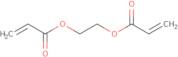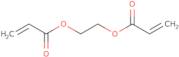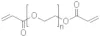
CAS 26570-48-9
:Polyethylene glycol diacrylate
Description:
Polyethylene glycol diacrylate (PEGDA) is a versatile polymer used primarily in the fields of materials science and biomedicine. It is characterized by its acrylate functional groups, which allow for easy cross-linking and polymerization, making it suitable for creating hydrogels and other polymeric networks. PEGDA is soluble in water and organic solvents, which enhances its applicability in various formulations. The presence of polyethylene glycol (PEG) in its structure imparts biocompatibility and hydrophilicity, making it ideal for biomedical applications such as drug delivery systems, tissue engineering scaffolds, and contact lenses. Additionally, PEGDA exhibits low toxicity and can be modified to tailor its mechanical and chemical properties for specific applications. Its ability to form hydrogels upon exposure to UV light or heat further expands its utility in creating responsive materials. Overall, PEGDA is a valuable compound in both research and industrial applications due to its unique properties and adaptability.
Formula:(C2H4O)nC6H6O3
InChI:InChI=1/C3H4O2.C2H6O2/c1-2-3(4)5;3-1-2-4/h2H,1H2,(H,4,5);3-4H,1-2H2
InChI key:InChIKey=KUDUQBURMYMBIJ-UHFFFAOYSA-N
SMILES:O(CCOC(C=C)=O)C(C=C)=O
Synonyms:- 14Eg-A
- 4Eg-A
- 9Eg-A
- Extralink
- Pegda
- α-(Oxo-2-propenyl)-ω-[(1-oxo-2-propenyl)oxy]poly(oxy-1,2-ethanediyl)
- α-Acryloyl-ω-(acryloyloxy)poly(oxyethylene)
- Poly(oxy-1,2-ethanediyl), α-(1-oxo-2-propenyl)-ω-[(1-oxo-2-propenyl)oxy]-
- prop-2-enoic acid - ethane-1,2-diol (1:1)
- Polyethylene glycol diacrylate
- Glycols, polyethylene, diacrylate
- Polyethylene glycol 1000 diacrylate
- Poly(oxy-1,2-ethanediyl), α-(1-oxo-2-propen-1-yl)-ω-[(1-oxo-2-propen-1-yl)oxy]-
- Acrylic acid, diester with polyethylene glycol
- See more synonyms
Filter by
Purity percentage
0
100
|
0
|
50
|
90
|
95
|
100
- Lower prices
- Higher prices
- Lower purities
- Higher purities
- Faster estimated delivery
Poly(ethylene glycol) diacrylate average Mn 1000
CAS:Acrylate-PEG-AcrylatePurity:average Mn 1000(stabilized with MEHQ and BHT)Poly(ethylene glycol) diacrylate average Mn 575
CAS:Acrylate-PEG-AcrylatePurity:average Mn 575(stabilized with MEHQ)Poly(ethylene glycol) diacrylate average Mn 10000
CAS:Acrylate-PEG-AcrylatePurity:average Mn 10000(stabilized with MEHQ)Poly(ethylene glycol) diacrylate average Mn 2000
CAS:Acrylate-PEG-AcrylatePurity:average Mn 2000(stabilized with MEHQ)Poly(ethylene glycol) diacrylate average Mn 4000
CAS:Acrylate-PEG-AcrylatePurity:average Mn 4000(stabilized with MEHQ)Poly(ethylene glycol) diacrylate average Mn 6000
CAS:Acrylate-PEG-AcrylatePurity:average Mn 6000(stabilized with MEHQ)Poly(ethylene glycol) diacrylate average Mn 700
CAS:Acrylate-PEG-AcrylatePurity:average Mn 700(stabilized with MEHQ)Polyethylene glycol di-acrylate) - average Mn 575
CAS:Polyethylene glycol di-acrylate (PEGDA) is a polymer that is used in the production of hydrogels. It has been shown to be an effective antimicrobial agent against bacteria and fungi, and has also been shown to have transport properties across cell membranes. PEGDA can be synthesized by reacting ethylene diamine with acryloyl chloride in the presence of a catalyst such as hydrochloric acid. The optimum concentration of PEGDA is between 600-650 g/L, but it can be produced at concentrations as low as 200 g/L.Formula:(C2H4O)n•C6H6O3Purity:Min. 95%Poly(ethylene glycol) diacrylate - MW 400
CAS:Poly(ethylene glycol) diacrylate is a PEG polymer categorised as homobifunctional PEG (X-PEG X). Used as a linker, poly(ethylene glycol) diacrylate is used to attached PEG to proteins, peptides, oligonucleotides, nanoparticles and small molecules via pegylation, a bioconjugation technique.Formula:(C2H4O)nC6H6O3Purity:Min. 95%Color and Shape:Clear Liquid