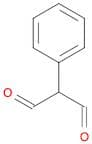
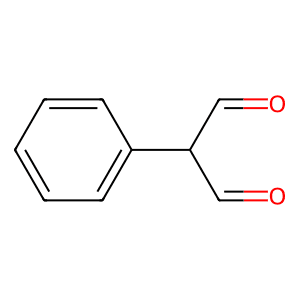
CAS 26591-66-2
:(2Z)-3-hydroxy-2-phenylprop-2-enal
Description:
(2Z)-3-hydroxy-2-phenylprop-2-enal, also known as cinnamaldehyde derivative, is an organic compound characterized by its conjugated double bond system and a hydroxyl group. It features a phenyl group attached to a prop-2-enal backbone, which contributes to its aromatic properties. The compound is typically a yellowish liquid with a distinctive sweet, spicy aroma reminiscent of cinnamon, making it of interest in flavoring and fragrance applications. It is soluble in organic solvents and exhibits moderate solubility in water due to the presence of the hydroxyl group. The compound can participate in various chemical reactions, including oxidation and condensation, due to its reactive aldehyde functional group. Additionally, it may exhibit biological activity, including potential antioxidant and antimicrobial properties, which are subjects of ongoing research. Safety data indicates that it should be handled with care, as it may cause irritation upon contact with skin or eyes. Overall, (2Z)-3-hydroxy-2-phenylprop-2-enal is a versatile compound with applications in both the food industry and chemical synthesis.
Formula:C9H8O2
InChI:InChI=1/C9H8O2/c10-6-9(7-11)8-4-2-1-3-5-8/h1-7,9H
SMILES:c1ccc(cc1)C(C=O)C=O
Synonyms:- (2Z)-3-Hydroxy-2-phenylacrylaldehyde
- Benzeneacetaldehyde, alpha-(hydroxymethylene)-, (alphaZ)-
- Phenylpropanedial
Sort by
Purity (%)
0
100
|
0
|
50
|
90
|
95
|
100
Found 4 products.
2-Phenylmalonaldehyde
CAS:2-PhenylmalonaldehydeFormula:C9H8O2Purity:95%Color and Shape: light brown powderMolecular weight:148.16g/mol2-Phenylmalondialdehyde
CAS:<p>2-Phenylmalondialdehyde is a chemical compound that is used in the synthesis of various drugs. It is synthesized by reacting phenylacetaldehyde with hydrochloric acid, hydrogen chloride, and ferric chloride. 2-Phenylmalondialdehyde has been shown to be an effective pain model for studying the effects of proton radiation. It also has been investigated as a potential treatment for neurological diseases such as Parkinson's disease and Alzheimer's disease. This molecule reacts with dopamine to form 2-phenylethylidenehydrazine, which may have therapeutic properties for treating these diseases. The presence of two phenyl groups and a chlorine atom in the molecule allow it to bind to fatty acids, which may increase its effectiveness against neurological diseases.</p>Formula:C9H8O2Purity:Min. 95%Molecular weight:148.16 g/mol