CAS 26628-22-8
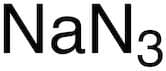
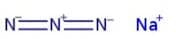
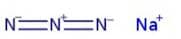
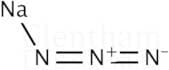
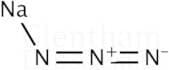
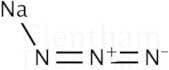
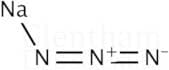
:Sodium azide
- Agrizide
- Aziduro De Sodio
- Azoture de sodium
- Hydrazoic acid, sodium salt
- Micro-O-Protect
- Natriumazid
- Nemazyd
- Nsc 3072
- Sep 100
- Sodium Azide (For Air Bag)
- Sodium azide (Na(N3))
- Sodium azide (Na(N<sub>3</sub>))
- Sodium azide white powder
- Sodium nitride (NaN3)
- See more synonyms
Sodium Azide
CAS:Formula:NaN3Purity:>99.0%(T)Color and Shape:White to Almost white powder to crystalineMolecular weight:65.01Sodium Azide, ≥99%
CAS:Thermo Scientific Sodium AzideFormula:N3NaPurity:99%Color and Shape:White crystalline powderMolecular weight:65.01Sodium azide, 99%
CAS:In airbag inflation, as a preservative in diagnostic medicinals.Sodium azide is used in organic synthesis for the introduction of an azide group to prepare a desired compound. It acts as a precursor to prepare inorganic azides like lead azide and silver azide. In biochemistry, it is useful as a proFormula:N3NaPurity:99%Color and Shape:White to pale cream, Powder or crystalline powderMolecular weight:65.01Sodium azide, 98%
CAS:Sodium azide, 98%
Formula:NaN3Purity:98%Color and Shape:white pwdr.Molecular weight:65.01Sodium azide, 99.5%
CAS:Formula:N3NaPurity:(Titration) ≥ 99.5%Color and Shape:White powder, crystalline powder or crystalsMolecular weight:65.01Sodium azide
CAS:Formula:N3NaPurity:≥ 99.0%Color and Shape:White crystalline powderMolecular weight:65.01Sodium azide, 0.1M solution
CAS:Formula:N3NaColor and Shape:Clear, colourless liquidMolecular weight:65.01Sodium azide, 0.005% solution
CAS:Formula:N3NaColor and Shape:Clear, colourless liquidMolecular weight:65.01Sodium Azide
CAS:Applications Sodium azide is commonly used as a preservative in aqueous laboratory reagents and biological samples. Sodium azide’s toxicity can be attributed to its role as a reversible inhibitor of mitochondrial respiration and insulin secretion in human pancreatic cells. Acts as a catalyst for: Oxidative decarboxylation & Michael addition reactions.Used as a reagent for synthesis of Blue fluorescent copolymers; Metal phosphonates & Arenes via aminations. Actively involved in regioselective synthesis of prianosin B.
Not a dangerous good if item is equal to or less than 1g/ml and there is less than 100g/ml in the package
References Chang, S. & Lamm, S.: Int. J. Toxicol., 22, 175 (2003); Misler, S., et al.: Pflügers Archiv., 421, 289 (1992)Formula:N3·NaColor and Shape:White To Off-WhiteMolecular weight:65.01Sodium azide
CAS:Sodium azides are a group of chemical compounds that inhibit the enzyme activity of human polymorphonuclear leukocytes. Sodium azide is used as a model system to study p-glycoprotein inhibition, which is an important drug target for cancer chemotherapy. It has also been shown to inhibit mouse monoclonal antibody production in vitro. Energy metabolism is affected by sodium azide through its ability to induce neuronal death and inhibit energy-dependent processes such as neurotransmitter release and synaptic vesicle exocytosis. Sodium azide has also been shown to have protective effects on eye disorders and infectious diseases, including wild-type strains of bacteria such as Staphylococcus aureus.Formula:NaN3Purity:Min. 99%Color and Shape:White PowderMolecular weight:65.01 g/molSodium Azide extrapure AR, ACS, 99%
CAS:Formula:NaN3Purity:min. 99%Color and Shape:White, Crystalline powder, Clear, ColourlessMolecular weight:65.01Sodium Azide for molecular biology, 99%
CAS:Formula:NaN3Purity:min. 99%Color and Shape:White, Crystalline powder, Clear, ColourlessMolecular weight:65.01Sodium Azide PrimeDx, 99%
CAS:Formula:NaN3Purity:min. 99.0%Color and Shape:White, Crystalline powder, Clear, ColourlessMolecular weight:65.01