CAS 26673-30-3
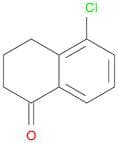
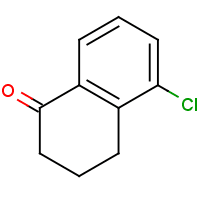
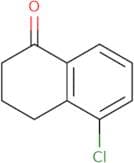
:5-chloro-3,4-dihydronaphthalen-1(2H)-one
Description:
5-Chloro-3,4-dihydronaphthalen-1(2H)-one, with the CAS number 26673-30-3, is an organic compound characterized by its naphthalene structure, which features a chlorine substituent and a ketone functional group. This compound typically appears as a solid at room temperature and is known for its potential applications in organic synthesis and medicinal chemistry. The presence of the chlorine atom introduces unique reactivity patterns, making it a useful intermediate in the synthesis of various pharmaceuticals and agrochemicals. The dihydronaphthalene moiety contributes to its hydrophobic nature, influencing its solubility in organic solvents. Additionally, the compound may exhibit biological activity, which can be explored in drug development contexts. Its stability and reactivity can be affected by environmental conditions, such as temperature and pH, which are important considerations in handling and storage. Overall, 5-chloro-3,4-dihydronaphthalen-1(2H)-one is a significant compound in the field of organic chemistry, with diverse applications stemming from its structural characteristics.
Formula:C10H9ClO
InChI:InChI=1/C10H9ClO/c11-9-5-1-4-8-7(9)3-2-6-10(8)12/h1,4-5H,2-3,6H2
SMILES:c1cc2c(CCCC2=O)c(c1)Cl
Synonyms:- 1(2H)-naphthalenone, 5-chloro-3,4-dihydro-
- 5-Chloro-1-tetralone
- 5-Chloro-3,4-dihydronaphthalen-1(2H)-one
Sort by
Purity (%)
0
100
|
0
|
50
|
90
|
95
|
100
Found 4 products.
5-Chloro-1-tetralone
CAS:5-Chloro-1-tetralone is an oxime that is used as a topical agent for the treatment of staphylococcal infections. It acts by inhibiting bacterial cell wall synthesis, preventing the formation of cross-links between the peptidoglycan chains. 5-Chloro-1-tetralone has potent antibacterial activity against many bacteria and fungi. This compound has shown to be effective against escherichia coli, pneumoniae, and imidazole derivatives. The mechanism of action is not well understood, but it may involve inhibition of protein synthesis or DNA replication by binding to enzymes involved in these processes.
Formula:C10H9ClOPurity:Min. 95%Molecular weight:180.63 g/molRef: 3D-BBA67330
Discontinued product