CymitQuimica logo

CAS 267241-99-6

:

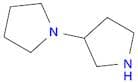
1,3'-bipyrrolidine

Description:
1,3'-Bipyrrolidine, identified by its CAS number 267241-99-6, is a bicyclic organic compound featuring two pyrrolidine rings connected by a single bond. This compound exhibits characteristics typical of nitrogen-containing heterocycles, including a relatively high degree of basicity due to the presence of nitrogen atoms in its structure. The molecular structure contributes to its potential as a ligand in coordination chemistry and as a building block in organic synthesis. 1,3'-Bipyrrolidine is typically a colorless to pale yellow liquid or solid, depending on its specific form and purity. It is soluble in polar organic solvents, which enhances its utility in various chemical reactions. The compound may also exhibit interesting pharmacological properties, making it a subject of interest in medicinal chemistry. However, as with many nitrogen-containing compounds, it is essential to handle it with care, considering potential toxicity and reactivity. Overall, 1,3'-bipyrrolidine is a versatile compound with applications in both research and industrial settings.
Formula:C8H16N2
InChI:InChI=1/C8H16N2/c1-2-6-10(5-1)8-3-4-9-7-8/h8-9H,1-7H2
SMILES:C1CCN(C1)C1CCNC1
Sort by

Purity (%)
0
100
|
0
|
50
|
90
|
95
|
100
Found 2 products.
  • 1,3'-Bipyrrolidine

    CAS:
    Formula:C8H16N2
    Purity:%
    Molecular weight:140.2260

    Ref: IN-DA00C27P

    ne
    To inquire
  • [1,3']Bipyrrolidinyl

    CAS:
    <p>[1,3']Bipyrrolidinyl (BPY) is an antibacterial agent that binds to the receptor site on bacteria and inhibits bacterial growth. It has been shown to be effective against a number of Gram-negative bacteria including Haemophilus influenzae, Escherichia coli, and Pseudomonas aeruginosa. BPY has been found to hydrate at physiological pH and is eliminated from the body primarily in urine. BPY has also been found to have good plasma exposure due to its high lipid solubility. The affinity of BPY for bacterial ribosomes is greater than other antibacterial agents such as carboxylates or fluoroquinolones. The binding of BPY with bacterial ribosomes inhibits protein synthesis and cell division, leading to cell death by inhibiting the production of proteins vital for cell division.</p>
    Formula:C8H16N2
    Purity:Min. 95%
    Molecular weight:140.23 g/mol

    Ref: 3D-SKA24199

    5g
    1,085.00€
    500mg
    341.00€