CAS 26726-16-9
:2-Furancarbonylchloride, 5-bromo-
Description:
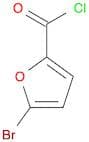
2-Furancarbonylchloride, 5-bromo- is an organic compound characterized by the presence of a furan ring, a carbonyl group, and a bromine substituent. The furan ring contributes to its aromatic properties, while the carbonyl group (C=O) indicates that it is an acyl chloride, which is typically reactive and can participate in various chemical reactions, such as nucleophilic acyl substitution. The presence of the bromine atom at the 5-position of the furan ring can influence the compound's reactivity and polarity, making it useful in synthetic organic chemistry. This compound is often utilized as an intermediate in the synthesis of more complex molecules, including pharmaceuticals and agrochemicals. Its reactivity, particularly as an acyl chloride, allows it to readily react with alcohols and amines to form esters and amides, respectively. Safety precautions should be taken when handling this compound, as acyl chlorides can be corrosive and may release harmful gases upon reaction with water.
Formula:C5H2BrClO2
Synonyms:- 2-Furoylchloride, 5-bromo- (7CI,8CI)
- 2-Bromo-5-furancarbonyl chloride
- 5-Bromo-2-furancarbonyl chloride
- 5-Bromo-2-furoyl chloride
- 5-Bromofuroylchloride
Sort by
Purity (%)
0
100
|
0
|
50
|
90
|
95
|
100
Found 4 products.
2-Furancarbonyl chloride, 5-bromo- (9CI)
CAS:Formula:C5H2BrClO2Purity:95%Color and Shape:SolidMolecular weight:209.42525-Bromofuran-2-carbonyl chloride
CAS:5-Bromofuran-2-carbonyl chloridePurity:95%Color and Shape:SolidMolecular weight:209.43g/mol5-Bromo-furan-2-carbonyl chloride
CAS:Formula:C5H2BrClO2Purity:95%Color and Shape:SolidMolecular weight:209.425-Bromo-furan-2-carbonyl chloride
CAS:5-Bromo-furan-2-carbonyl chloride is a colorless liquid that is soluble in organic solvents. It has a thionyl, polymerized odor and can be used as a feedstock for the production of amines, cyclopentadienyl, and chloride. 5-Bromo-furan-2-carbonyl chloride also has radiation damage properties and can be used in radiochemical synthesis of pyrrole. This chemical has been used to produce glycosides by reacting with diluents such as methanol and ethanol.
Formula:C5H2BrClO2Purity:Min. 95%Molecular weight:209.42 g/mol