CAS 26904-64-3
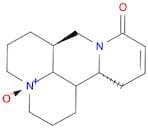
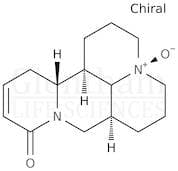
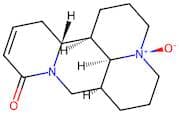
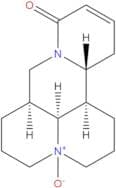
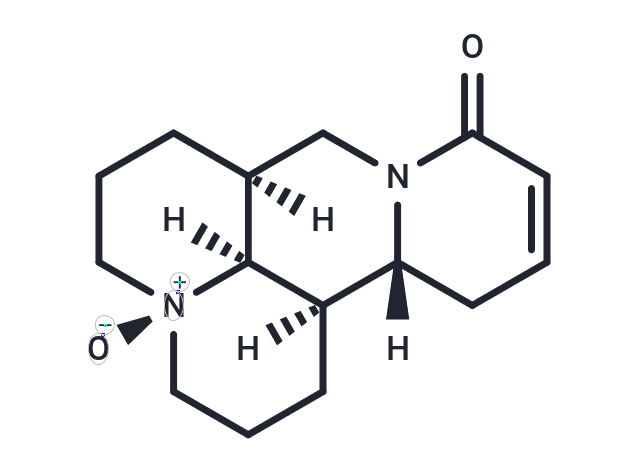
:N-Oxysophocarpine
Description:
N-Oxysophocarpine is a chemical compound classified as an alkaloid, primarily derived from the plant Sophora flavescens. It is known for its structural features, which include a complex bicyclic framework typical of many alkaloids. This compound exhibits various biological activities, including potential anti-inflammatory and analgesic properties, making it of interest in pharmacological research. N-Oxysophocarpine has been studied for its effects on the central nervous system and may influence neurotransmitter systems. Its solubility characteristics can vary, often being more soluble in organic solvents than in water, which is common for many alkaloids. The compound's molecular interactions and mechanisms of action are subjects of ongoing research, particularly in the context of developing therapeutic agents. As with many alkaloids, caution is advised regarding its use, as it may exhibit toxicity at certain concentrations. Overall, N-Oxysophocarpine represents a significant area of study within natural product chemistry and pharmacology.
Formula:C15H22N2O2
InChI:InChI=1/C15H22N2O2/c18-14-7-1-6-13-12-5-3-9-17(19)8-2-4-11(15(12)17)10-16(13)14/h1,7,11-13,15H,2-6,8-10H2
SMILES:C1=CC(=O)N2CC3CCCN4(=O)CCCC(C2C1)C34
Synonyms:- Oxysophocarpine
- Matridin-15-one, 13,14-didehydro-, 1-oxide
- (7aS,13aR,13bR,13cS)-2,3,6,7,7a,8,13,13a,13b,13c-decahydro-1H,5H,10H-dipyrido[2,1-f:3',2',1'-ij][1,6]naphthyridin-10-one 4-oxide
- 2,3,6,7,7a,8,13,13a,13b,13c-decahydro-1H,5H,10H-dipyrido[2,1-f:3',2',1'-ij][1,6]naphthyridin-10-one 4-oxide
- Sophocarpidine
- sophocarpine N-oxide
Sort by
Purity (%)
0
100
|
0
|
50
|
90
|
95
|
100
Found 7 products.
Oxysophocarpine
CAS:Oxysophocarpine is extracted from Sophra flavescens Ait.Formula:C15H22N2O2Purity:99.69% - 99.97%Color and Shape:SolidMolecular weight:262.35Oxysophocarpine
CAS:Oxysophocarpine is a natural compound that inhibits the ATP binding cassette (ABC) transporter, which is known as P-glycoprotein. It has been shown to inhibit the polymerase chain reaction (PCR), mitochondrial membrane potential, and hepatitis B virus replication in vitro. The effect of oxysophocarpine on HIV-1 replication was studied using a synchronous fluorescence plate test. This compound also showed antiviral activity against herpes simplex virus type 1 (HSV-1) and cytomegalovirus (CMV). The antiviral effects of oxysophocarpine were found to be mediated by its ability to bind toll-like receptor 4 (TLR4). Oxysophocarpine may be used for the treatment of HIV/AIDS due to its ability to inhibit HIV-1 replication.Formula:C15H22N2O2Purity:Min. 98 Area-%Color and Shape:PowderMolecular weight:262.35 g/mol