CAS 2715-68-6
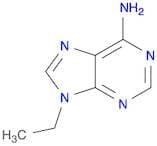
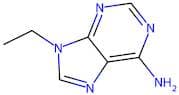
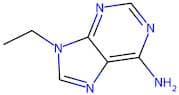
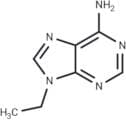
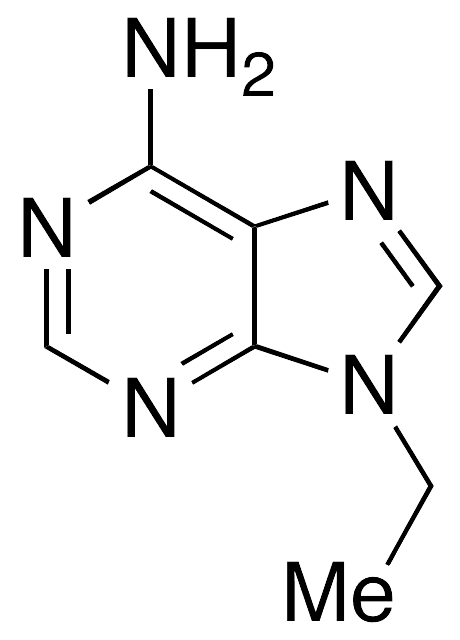
:9-ethyladenine
Description:
9-Ethyladenine is a purine derivative and an analog of adenine, which is a key component of nucleic acids. Its chemical structure features an ethyl group attached to the nitrogen atom at the 9-position of the adenine ring. This modification can influence its biological activity and interactions with nucleic acids and proteins. 9-Ethyladenine is primarily studied for its potential roles in biochemistry and molecular biology, particularly in relation to nucleic acid metabolism and the modulation of enzyme activities. The compound may exhibit properties such as being a substrate or inhibitor for certain enzymes, and its structural similarity to adenine allows it to participate in various biochemical pathways. Additionally, 9-ethyladenine can be used in research to explore the effects of alkylation on nucleobase function and stability. As with many chemical substances, safety and handling precautions should be observed, as its biological effects and toxicity profiles may vary depending on concentration and exposure conditions.
Formula:C7H9N5
InChI:InChI=1/C7H9N5/c1-2-12-4-11-5-6(8)9-3-10-7(5)12/h3-4H,2H2,1H3,(H2,8,9,10)
SMILES:CCn1cnc2c(N)ncnc12
Synonyms:- N9-Ethyladenine
- Nsc 14580
- 9H-Purin-6-amine, 9-ethyl- (9CI)
- Adenine, 9-ethyl- (8CI)
- 9-ethyl-9H-purin-6-amine
- 9H-Purin-6-amine,9-ethyl
Sort by
Purity (%)
0
100
|
0
|
50
|
90
|
95
|
100
Found 7 products.
9-Ethyladenine
CAS:9-Ethyladenine (6-Amino-9-ethylpurine) is a partially potent APRT (adenine phosphoribosyltransferase) inhibitor [1].Formula:C7H9N5Purity:99.35% - 99.37%Color and Shape:SolidMolecular weight:163.189-Ethyl-9H-purin-6-amine
CAS:Formula:C7H9N5Purity:97%Color and Shape:Liquid, No data available.Molecular weight:163.1849-Ethyl Adenine
CAS:Controlled ProductApplications 9-Ethyl Adenine is used in the manipulation of osmium arene complexes in order to achieve cancel cell cytotoxicity. Its a derivative of Adenine (A280480), widespread throughout animal and plant tissues combined with niacinamide, d-ribose, and phosphoric acids; a constituent of nucleic acids and coenzymes, such as codehydrase I and II, adenylic acid, coalaninedehydrase. It is used in microbial determination of niacin; in research on heredity, virus diseases, and cancer.
References Peacock, A. et al.: J Am. Chem. Soc., 129, 3348 (2007); Philips, et al.: J. Pharmacol. Exp. Ther., 20, 104 (1952), Lambertucci, C., et al.: Bioorg. Med. Chem., 17, 2812 (2009),Formula:C7H9N5Color and Shape:NeatMolecular weight:163.189-Ethyladenine
CAS:9-Ethyladenine is a molecule that belongs to the group of p2 type hydrogen bond. It has been shown to form intermolecular hydrogen bonds with other molecules, such as DNA and proteins. 9-Ethyladenine can also form intramolecular hydrogen bonds within its own structure. A number of crystal structures have been determined for 9-Ethyladenine and it has been shown to have an x-ray crystallographic symmetry. 9-Ethyladenine has shown that it is capable of repairing damaged DNA by interacting with the adenosine receptor, which may be due to its ability to bind with a specific region on the receptor.Formula:C7H9N5Purity:Min. 95%Molecular weight:163.18 g/mol