CAS 27451-36-1
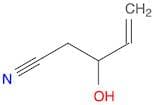
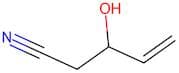
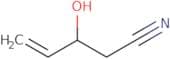
:3-Hydroxy-4-pentenenitrile
Description:
3-Hydroxy-4-pentenenitrile, with the CAS number 27451-36-1, is an organic compound characterized by its functional groups, including a hydroxyl (-OH) group and a nitrile (-C≡N) group, along with a pentene backbone. This compound typically appears as a colorless to pale yellow liquid and is known for its reactivity due to the presence of both the double bond and the nitrile group, which can participate in various chemical reactions such as nucleophilic additions and polymerizations. The hydroxyl group contributes to its potential solubility in polar solvents, while the nitrile group can influence its chemical behavior and interactions. 3-Hydroxy-4-pentenenitrile may be utilized in organic synthesis and could serve as an intermediate in the production of pharmaceuticals or agrochemicals. Safety data indicates that, like many nitriles, it should be handled with care due to potential toxicity and irritant properties. Proper storage and handling protocols are essential to ensure safety when working with this compound.
Formula:C5H7NO
InChI:InChI=1S/C5H7NO/c1-2-5(7)3-4-6/h2,5,7H,1,3H2
InChI key:InChIKey=PBCLOVRWBLGJQA-UHFFFAOYSA-N
SMILES:C(CC#N)(C=C)O
Synonyms:- (3S)-3-hydroxypent-4-enenitrile
- 1-Cyano-2-hydroxy-3-butene
- 2-Hydroxy-3-butenyl cyanide
- 3-Hydroxy-4-cyano-1-butene
- 3-Hydroxy-4-pentenenitrile
- 4-Pentenenitrile, 3-Hydroxy-
- Cyanohydroxybutene
- 3-Hydroxypent-4-enenitrile
Sort by
Purity (%)
0
100
|
0
|
50
|
90
|
95
|
100
Found 4 products.
1-cyano-2-hydroxy-3-butene
CAS:Formula:C5H7NOPurity:95%Color and Shape:LiquidMolecular weight:97.11523-Hydroxypent-4-enenitrile
CAS:3-Hydroxypent-4-enenitrilePurity:95% +(stabilized with TBC)Molecular weight:97.12g/mol1-Cyano-2-hydroxy-3-butene
CAS:1-Cyano-2-hydroxy-3-butene is a mitochondrial toxin that causes apoptosis in liver cells. It has been shown to cause liver lesions in CD1 mice. 1-Cyano-2-hydroxy-3-butene reduces the mitochondrial membrane potential, which leads to a decrease in ATP production and an increase in reactive oxygen species (ROS) production. This toxin also inhibits the transcriptional activity of nuclear receptors and induces the expression of cytochrome P450 2E1, leading to increased detoxification enzyme activity. 1-Cyano-2-hydroxy-3-butene is activated by mitochondria, which leads to its ability to cause apoptosis of liver cells.Formula:C5H7NOPurity:Min. 95%Color and Shape:Colorless PowderMolecular weight:97.12 g/mol