CAS 27462-39-1
:6H-Purin-6-one,2-amino-1,9-dihydro-9-b-D-xylofuranosyl-
Description:
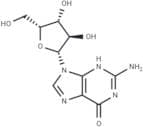
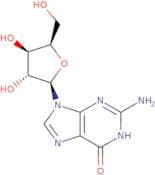
The chemical substance known as "6H-Purin-6-one, 2-amino-1,9-dihydro-9-b-D-xylofuranosyl-" with the CAS number 27462-39-1 is a nucleoside derivative, specifically a purine nucleoside. It features a purine base, which is a bicyclic structure composed of fused imidazole and pyrimidine rings, and is characterized by the presence of an amino group at the 2-position. The compound is linked to a sugar moiety, specifically a β-D-xylofuranosyl group, which is a five-membered sugar ring. This structure is significant in biochemistry as it plays a role in the formation of nucleotides, which are the building blocks of nucleic acids like DNA and RNA. The compound is typically involved in various biological processes, including cellular metabolism and genetic information transfer. Its properties may include solubility in water and potential interactions with enzymes and other biomolecules, making it relevant in pharmaceutical and biochemical research.
Formula:C10H13N5O5
Synonyms:- Guanine,9-b-D-xylofuranosyl- (8CI)
- 9-b-D-Xylofuranosylguanine
- Nsc115607
Sort by
Purity (%)
0
100
|
0
|
50
|
90
|
95
|
100
Found 3 products.
9-(b-D-Xylofuranosyl)guanine
CAS:9-(b-D-Xylofuranosyl)guanine is a Nucleoside Derivative - Xylo-nucleoside.Formula:C10H13N5O5Color and Shape:SolidMolecular weight:283.24Ref: TM-TNU0267
5mgTo inquire10mgTo inquire25mgTo inquire50mgTo inquire100mgTo inquire500mgTo inquire9-(beta-D-Xylofuranosyl)guanine
CAS:9-(β-D-xylofuranosyl)guanine (9XG) is a trifluoride. It is an antiviral agent that inhibits the growth of herpes virus, in particular by methylating guanosine to 9-methylguanosine in the viral DNA. 9XG binds to the viral DNA and prevents its replication through the inhibition of RNA synthesis. The drug is active against many different types of viruses and has been shown to be effective against tissue cultures infected with herpes virus. 9XG is synthesized from guanosine and boron trifluoride etherate, which are reacted at -78 degrees Celsius for three days. This yields a mixture of compounds with various peracylation groups, which are then separated by chromatography.
Purity:Min. 95%