CAS 27579-58-4
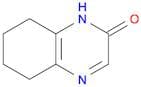
:5,6,7,8-tetrahydroquinoxalin-2(1H)-one
Description:
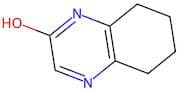
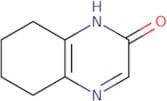
5,6,7,8-Tetrahydroquinoxalin-2(1H)-one is a bicyclic organic compound characterized by its fused quinoxaline structure, which includes a saturated tetrahydro moiety. This compound features a carbonyl group at the 2-position of the quinoxaline ring, contributing to its reactivity and potential biological activity. It is typically a white to off-white solid and is soluble in polar organic solvents. The presence of the nitrogen atoms in the ring structure allows for hydrogen bonding and can influence its interaction with biological targets, making it of interest in medicinal chemistry. This compound has been studied for its potential pharmacological properties, including neuroprotective and anti-inflammatory effects. Its synthesis often involves cyclization reactions of appropriate precursors, and it can serve as a building block for more complex molecules in drug development. As with many nitrogen-containing heterocycles, it may exhibit diverse biological activities, making it a subject of interest in various fields, including pharmaceuticals and agrochemicals.
Formula:C8H10N2O
InChI:InChI=1/C8H10N2O/c11-8-5-9-6-3-1-2-4-7(6)10-8/h5H,1-4H2,(H,10,11)
SMILES:C1CCc2c(C1)ncc(=O)[nH]2
Synonyms:- 2(1H)-quinoxalinone, 5,6,7,8-tetrahydro-
- 2-Quinoxalinol, 5,6,7,8-Tetrahydro-
- 5,6,7,8-Tetrahydroquinoxalin-2-ol
- 5,6,7,8-Tetrahydroquinoxalin-2(1H)-one
Sort by
Purity (%)
0
100
|
0
|
50
|
90
|
95
|
100
Found 4 products.
5,6,7,8-Tetrahydroquinoxalin-2-ol
CAS:5,6,7,8-Tetrahydroquinoxalin-2-olPurity:95%Molecular weight:150.18g/mol1,2,5,6,7,8-Hexahydroquinoxalin-2-one
CAS:1,2,5,6,7,8-Hexahydroquinoxalin-2-one is a stimulant that has been shown to be effective for the prophylaxis and/or treatment of diabetes. It is also a prophylactic agent for the prevention of pyrazinone. This drug has been shown to stimulate insulin secretion from pancreatic beta cells in vitro. 1,2,5,6,7,8-Hexahydroquinoxalin-2-one stimulates the release of insulin by stimulating exocytosis and inhibiting vesicle fusion in response to glucose. It can also inhibit or stimulate the release of insulin in response to other stimuli such as amino acids and fatty acids.
Formula:C8H10N2OPurity:Min. 95%Molecular weight:150.18 g/molRef: 3D-CBA57958
Discontinued product