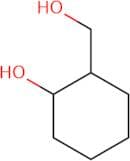
CAS 27583-43-3
:2-(hydroxymethyl)cyclohexanol
Description:
2-(Hydroxymethyl)cyclohexanol, with the CAS number 27583-43-3, is an organic compound characterized by a cyclohexane ring substituted with a hydroxymethyl group. This compound typically appears as a colorless to pale yellow liquid or solid, depending on its specific form and purity. It is soluble in water and organic solvents, which makes it versatile for various applications in organic synthesis and as an intermediate in the production of other chemicals. The presence of the hydroxymethyl group introduces both hydrophilic and hydrophobic characteristics, influencing its reactivity and interactions with other substances. This compound can participate in various chemical reactions, including oxidation and esterification, making it useful in the synthesis of more complex molecules. Additionally, its structural features may impart certain physical properties, such as boiling and melting points, which are influenced by the molecular weight and the presence of functional groups. Overall, 2-(hydroxymethyl)cyclohexanol is a valuable compound in chemical research and industrial applications.
Formula:C7H14O2
InChI:InChI=1/C7H14O2/c8-5-6-3-1-2-4-7(6)9/h6-9H,1-5H2
SMILES:C1CCC(C(C1)CO)O
Synonyms:- Cyclohexanemethanol, 2-hydroxy-
Sort by
Purity (%)
0
100
|
0
|
50
|
90
|
95
|
100
Found 1 products.
2-(Hydroxymethyl)cyclohexan-1-ol
CAS:<p>2-(Hydroxymethyl)cyclohexan-1-ol is a potassium salt that is used as an intermediate for the synthesis of other chemicals. It has been shown to be a strong inhibitor of the enzyme acetylcholinesterase in vitro, which leads to increased levels of acetylcholine and neurotransmission. The compound has also been shown to inhibit the growth of bacteria by inhibiting protein synthesis through an unknown mechanism. 2-(Hydroxymethyl)cyclohexan-1-ol is isolated from a variety of sources, including wood tar, coal tar, and petroleum.<br> 2-(Hydroxymethyl)cyclohexan-1-ol can be synthesized by solvolysis with potassium hydroxide or tetrafluoroborate followed by acetolysis with acetic anhydride.<br> Potassium acetate can also be used to synthesize 2-(hydroxymethyl)-cyclohexan-1-</p>Formula:C7H14O2Purity:Min. 95%Molecular weight:130.18 g/mol