CAS 27704-96-7
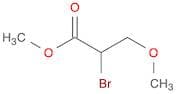
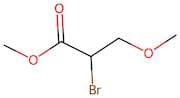
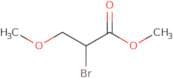
:Methyl 2-bromo-3-methoxypropanoate
Description:
Methyl 2-bromo-3-methoxypropanoate is an organic compound characterized by its ester functional group, which is derived from the reaction of a carboxylic acid and an alcohol. This compound features a bromine atom attached to the second carbon of a propanoate chain, along with a methoxy group (-OCH3) on the third carbon. Its molecular structure contributes to its reactivity, making it useful in various synthetic applications, particularly in organic synthesis and medicinal chemistry. The presence of the bromine atom enhances its electrophilic character, facilitating nucleophilic substitution reactions. Methyl 2-bromo-3-methoxypropanoate is typically a colorless to pale yellow liquid with a distinctive odor. It is soluble in organic solvents but has limited solubility in water due to its hydrophobic characteristics. Safety precautions should be taken when handling this compound, as it may pose health risks if inhaled or ingested. Overall, its unique structure and reactivity make it a valuable intermediate in the synthesis of more complex organic molecules.
Formula:C5H9BrO3
InChI:InChI=1/C5H9BrO3/c1-8-3-4(6)5(7)9-2/h4H,3H2,1-2H3
SMILES:COCC(C(=O)OC)Br
Synonyms:- Methyl 2-bromo-3-methoxypropionate
Sort by
Purity (%)
0
100
|
0
|
50
|
90
|
95
|
100
Found 3 products.
Propanoic acid, 2-bromo-3-methoxy-, methyl ester
CAS:Formula:C5H9BrO3Purity:98%Color and Shape:LiquidMolecular weight:197.0272Methyl 2-bromo-3-methoxypropanoate
CAS:Methyl 2-bromo-3-methoxypropanoateFormula:C5H9BrO3Purity:95%Color and Shape: clear. almost colourless liquidMolecular weight:197.03g/molMethyl 2-bromo-3-methoxypropionate
CAS:Methyl 2-bromo-3-methoxypropionate is a nucleophilic alcohol. It has been used as a reagent in the preparation of an ether, diethyl ether, and hexane. Methyl 2-bromo-3-methoxypropionate is stable in the presence of light and heat, but reacts very quickly with water. The reaction time can be decreased by using dicarbonate or acetonitrile instead of water. This chemical is also used to study tumour growth and tumor development in animals.Formula:C5H9BrO3Purity:Min. 95%Molecular weight:197.03 g/mol