CAS 2785-78-6
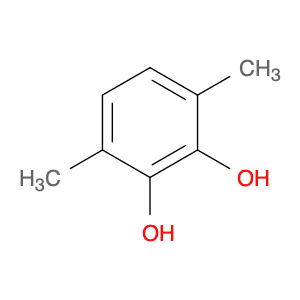
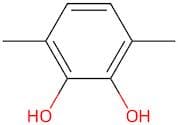
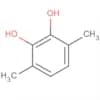
:1,2-Benzenediol, 3,6-dimethyl-
Description:
1,2-Benzenediol, 3,6-dimethyl- (CAS 2785-78-6), also known as 3,6-dimethylcatechol, is an organic compound characterized by its aromatic structure featuring a benzene ring with two hydroxyl (-OH) groups and two methyl (-CH₃) substituents. The presence of hydroxyl groups imparts phenolic properties, making it soluble in polar solvents and contributing to its reactivity in various chemical reactions, such as oxidation and substitution. This compound typically exhibits a colorless to pale yellow appearance and has a relatively low melting point. It is used in various applications, including as an intermediate in organic synthesis and in the production of certain dyes and pharmaceuticals. Additionally, its antioxidant properties may find utility in food preservation and cosmetic formulations. Safety data indicates that, like many phenolic compounds, it should be handled with care due to potential irritant effects on skin and mucous membranes. Overall, 1,2-Benzenediol, 3,6-dimethyl- is a versatile compound with significant relevance in both industrial and research contexts.
Formula:C8H10O2
Synonyms:- 3,6-dimethylcatechol
- 3,6-Dimethyl-1,2-benzenediol
- 3,6-diMethyl catechol
- 1,2-Benzenediol, 3,6-dimethyl-
- 3,6-Dimethylpyrocatechol
- 3,6-DIMETHYLBENZENE-1,2-DIOL
Sort by
Purity (%)
0
100
|
0
|
50
|
90
|
95
|
100
Found 5 products.
1,2-Benzenediol, 3,6-dimethyl-
CAS:Formula:C8H10O2Purity:97%Color and Shape:SolidMolecular weight:138.16383,6-Dimethylbenzene-1,2-diol
CAS:3,6-Dimethylbenzene-1,2-diol is a phenol derivative widely used in biochemical experiments and drug synthesis research.Formula:C8H10O2Purity:99.09%Color and Shape:SolidMolecular weight:138.163,6-Dimethylbenzene-1,2-diol
CAS:3,6-Dimethylbenzene-1,2-diol is a bactericidal agent that belongs to the class of amides. It inhibits bacterial growth by binding to water molecules and thus preventing their availability for use in the construction of cell walls. 3,6-Dimethylbenzene-1,2-diol has been shown to be efficient when used as a catalyst for the reaction between 2-aminoterephthalic acid and benzodioxan under mild conditions. This process results in a fluorescent product with an intramolecular hydrogen bond. The catalytic mechanism is thought to involve an active site containing a hydroxyl group that attacks the substrate at the C3 position, followed by a proton transfer from water molecule to form a hydroxyl oxygen intermediate.Formula:C8H10O2Purity:Min. 95%Molecular weight:138.17 g/mol