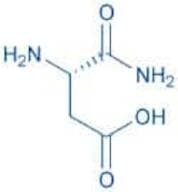
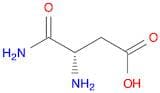
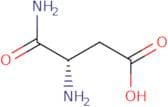
CAS 28057-52-5
:L-aspartic acid amide
Description:
L-aspartic acid amide, also known as aspartame, is a non-essential amino acid derivative characterized by its sweet taste and use as a low-calorie artificial sweetener. It is a white crystalline powder that is soluble in water and has a slightly acidic pH. The compound is formed by the amide linkage of L-aspartic acid and phenylalanine, making it a dipeptide. L-aspartic acid amide is stable under dry conditions but can degrade when exposed to heat, moisture, or prolonged storage, which may affect its sweetness. It is commonly used in food and beverage products as a sugar substitute, providing sweetness without the calories associated with sugar. Additionally, it has applications in pharmaceuticals and dietary supplements. While generally recognized as safe for consumption, some individuals may experience sensitivity to aspartame, particularly those with phenylketonuria (PKU), due to the presence of phenylalanine. Overall, L-aspartic acid amide is valued for its sweetening properties and versatility in various applications.
Formula:C4H8N2O3
Synonyms:- H-Asp-NH2
- H-Asp-Nh2 H2O
Sort by
Purity (%)
0
100
|
0
|
50
|
90
|
95
|
100
Found 3 products.
H-Asp-NH₂
CAS:Bachem ID: 4010004.
Formula:C4H8N2O3Purity:> 99%Color and Shape:White PowderMolecular weight:132.12(3S)-3,4-Diamino-4-oxobutanoic acid
CAS:Formula:C4H8N2O3Purity:95%Color and Shape:SolidMolecular weight:132.1179H-Asp-NH2
CAS:H-Asp-NH2 is an isomeric mixture of l-phenylalanine and its methyl ester. It is used as a feed additive in animals to improve growth and feed conversion efficiency. The deamination of H-Asp-NH2 produces hydrogen peroxide, which has been shown to be lethal to enterobacteriaceae. This compound may also act as a microbial growth inhibitor by preventing the formation of peptides during synthesis.
Formula:C4H8N2O3Purity:Min. 95%Molecular weight:132.12 g/mol