CAS 28463-24-3
:Glucoraphenin
Description:
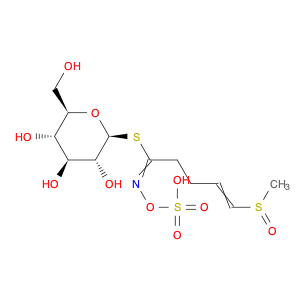
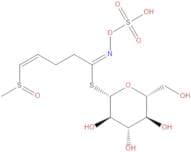
Glucoraphenin is a naturally occurring glucosinolate, a type of sulfur-containing compound primarily found in cruciferous vegetables, such as broccoli and Brussels sprouts. It is a precursor to the bioactive compound sulforaphane, which is known for its potential health benefits, including antioxidant and anti-cancer properties. Glucoraphenin is characterized by its chemical structure, which includes a glucose moiety attached to a sulfonated phenyl group. Upon hydrolysis, it can be converted into sulforaphane through the action of the enzyme myrosinase, which is activated when the plant tissue is damaged. This compound is of interest in nutritional and pharmaceutical research due to its role in the body's detoxification processes and its potential to modulate various biological pathways. Additionally, glucoraphenin is being studied for its effects on inflammation and its ability to support overall health. Its stability and solubility in water make it a suitable candidate for dietary supplements and functional foods aimed at promoting health benefits associated with cruciferous vegetable consumption.
Formula:C12H21NO11S3
InChI:InChI=1/C12H21NO11S3/c1-26(19)4-2-3-6(11(18)13-24-27(20,21)22)12(25)10(17)9(16)8(15)7(5-14)23-12/h2,4,6-10,14-17,25H,3,5H2,1H3,(H,13,18)(H,20,21,22)/b4-2+/t6?,7-,8-,9+,10-,12+,26?/m1/s1
InChI key:InChIKey=ZFLXCZJBYSPSKU-SISVVIKZSA-N
SMILES:S(C(CCC=CS(C)=O)=NOS(=O)(=O)O)[C@@H]1O[C@H](CO)[C@@H](O)[C@H](O)[C@H]1O
Synonyms:- Glucopyranose, 1-thio-, 1-[5-(methylsulfinyl)-4-pentenohydroximate] NO-(hydrogen sulfate), β-D-
- 4-Methylsulfinyl-3-butenylglucosinolate
- Glucoraphenin
- 4-Methylsulphinyl-3-butenyl glucosinolate
- β-D-Glucopyranose, 1-thio-, 1-[5-(methylsulfinyl)-N-(sulfooxy)-4-pentenimidate]
- glucoraphenin(1-)
- See more synonyms
Sort by
Purity (%)
0
100
|
0
|
50
|
90
|
95
|
100
Found 3 products.
Glucoraphenin
CAS:Glucoraphenin is a skin tumor promoter that has been found to act as an enzyme inhibitor. It inhibits the activity of detoxification enzymes, such as cytochrome P450 and glutathione reductase, and can lead to cancer. Glucoraphenin is also an inhibitor of the membrane system, which may be due to its ability to inhibit protein synthesis. The biological properties of glucoraphenin are not well understood, but it has been shown to have effects on cellular energy metabolism by inhibiting enzymes involved in the Krebs cycle. Glucoraphenin binds to membranes by adsorption and is resistant to hydrolysis by esterases or other enzymes.
Formula:C12H21NO10S3Purity:Min. 95%Color and Shape:PowderMolecular weight:435.5 g/mol