


CAS 284665-11-8
:N-(9-fluorenylmethoxycarbonyl)glycine-2,2-D2
Glycine-2,2-d2-N-FMOC
CAS:Formula:HOOCCD2NHFMOCPurity:98 atom % DColor and Shape:White SolidMolecular weight:299.32N-Fmoc-glycine-d2
CAS:Controlled ProductApplications Isotope labelled N-Fmoc-glycine is an N-Fmoc-protected form of Glycine (G615990). Glycine is a nonessential amino acid that acts as an inhibitory neyrotransmitter in the vertebrate central nervous system. Glycine also posesses cytoprotective against oxidant damage in the kidney.
References Eulenberg, V., et al.: Trend. Biochem. Sci., 30, 325 (2005); Gundersen, R., et al.: Acta Anaesth. Scand., 49, 1108 (2005); Lockart, R. & Eagle, H.: Science, 129, 252 (1959); Sogabe, K., et al.: Kidn. Int., 50, 845 (1996)Formula:C17H13D2NO4Color and Shape:NeatMolecular weight:299.32Fmoc-[D2]Gly-OH
CAS:Controlled ProductFmoc-Gly is a synthetic amino acid that has been used in the synthesis of peptides and proteins. The Fmoc group is removed by an amidase to yield the desired peptide. Fmoc-gly can be quantified using matrix-assisted laser desorption/ionization mass spectrometry (MALDI-TOF). This technique is also used for the analysis of cellular uptake, intracellular localization, and metabolic stability. A laser is used to vaporize a sample and create ions. These ions are then analyzed with a mass spectrometer to generate a spectrum that can be matched with a database of known compounds. MALDI-TOF has been shown to be more efficient than other methods for peptide analysis such as electrospray ionization.
Formula:C17H13D2NO4Purity:Min. 95%Molecular weight:299.32 g/molRef: 3D-FF111393
Discontinued product


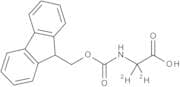

![Fmoc-[D₂]Gly-OH](/_next/image/?url=https%3A%2Fstatic.cymitquimica.com%2Fproducts%2F01%2Fthumb%2F4071076.jpg&w=3840&q=75)

![Fmoc-[D2]Gly-OH](/_next/image/?url=https%3A%2Fstatic.cymitquimica.com%2Fproducts%2F3D%2Fthumb%2FFF111393.jpg&w=3840&q=75)
