CAS 2850-36-4
:1,3-Di-n-butylxanthine
Description:
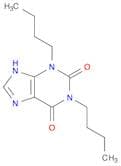
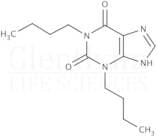
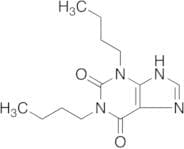
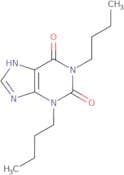
1,3-Di-n-butylxanthine, with the CAS number 2850-36-4, is a xanthine derivative that exhibits characteristics typical of compounds in this class. It is a white to off-white crystalline solid that is soluble in organic solvents but has limited solubility in water. This compound is known for its role as a phosphodiesterase inhibitor, which can influence various biological processes, including cellular signaling and metabolism. Its structure features two n-butyl groups attached to the nitrogen atoms at positions 1 and 3 of the xanthine core, which contributes to its pharmacological properties. 1,3-Di-n-butylxanthine has been studied for its potential effects on the central nervous system and its ability to modulate the activity of adenosine receptors. As with many xanthine derivatives, it may exhibit stimulant effects and has been investigated for its potential therapeutic applications. However, safety and toxicity profiles should be considered when handling or using this compound in research or pharmaceutical contexts.
Formula:C13H20N4O2
InChI:InChI=1/C13H20N4O2/c1-3-5-7-16-11-10(14-9-15-11)12(18)17(13(16)19)8-6-4-2/h9H,3-8H2,1-2H3,(H,14,15)
SMILES:CCCCn1c2c(c(=O)n(CCCC)c1=O)nc[nH]2
Synonyms:- Dibutylxanthine
- 1,3-dibutyl-3,7-dihydro-1H-purine-2,6-dione
Sort by
Purity (%)
0
100
|
0
|
50
|
90
|
95
|
100
Found 4 products.
1,3-Dibutylxanthine
CAS:Controlled ProductApplications Denbefylline intermediate
References Feoktistov, I., et al.: Biochem. Pharmacol., 62, 1163 (2001), Rogozin, E., et al.: Carcinogen., 29, 1228 (2008),Formula:C13H20N4O2Color and Shape:NeatMolecular weight:264.321,3-Dibutylxanthine
CAS:Controlled Product1,3-Dibutylxanthine (DBX) is a xanthine derivative that has been shown to inhibit the binding of adenosine receptors. It is used in cell culture experiments to study the activation of adenosine receptors. DBX binds to the receptor with high affinity and shows similar affinities for all eight adenosine receptor subtypes. The compound also inhibits phosphoinositide metabolism, which may be related to its inhibitory effects on the metabolism of these compounds. DBX has been shown to have a potent estrogenic activity in ovary cells and a non-genomic effect on muscle cells, but does not affect rat brain tissue.Formula:C13H20N4O2Purity:Min. 95%Molecular weight:264.32 g/mol