CAS 28529-34-2
:Ac-Leu-NH2
Description:
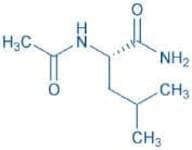
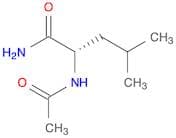
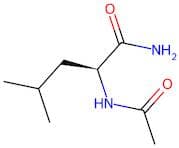
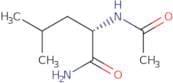
Ac-Leu-NH2, also known as Acetyl-Leucine amide, is a synthetic peptide derivative characterized by the presence of an acetyl group attached to the amino acid leucine, followed by an amine group. This compound is typically used in biochemical research and pharmaceutical applications due to its role in studying peptide interactions and protein synthesis. The acetylation of leucine enhances its stability and solubility, making it a useful building block in peptide synthesis. Ac-Leu-NH2 exhibits properties typical of peptides, including the ability to form hydrogen bonds and participate in various biochemical interactions. Its structure allows it to mimic natural peptides, which can be advantageous in drug design and development. Additionally, the presence of the amine group may influence its reactivity and interaction with biological systems. Overall, Ac-Leu-NH2 serves as a valuable tool in the exploration of peptide chemistry and its applications in medicinal chemistry.
Formula:C8H16N2O2
InChI:InChI=1/C8H16N2O2/c1-5(2)4-7(8(9)12)10-6(3)11/h5,7H,4H2,1-3H3,(H2,9,12)(H,10,11)/t7-/m0/s1
SMILES:CC(C)C[C@@H](C(=N)O)N=C(C)O
Synonyms:- N~2~-acetyl-L-leucinamide
Sort by
Purity (%)
0
100
|
0
|
50
|
90
|
95
|
100
Found 5 products.
Ac-Leu-NH₂
CAS:The N-acetylamino acid amides NALA, NALMA, NAKA, NAQA, and NATA have been used as model compounds of varying polarity in hydration studies.Formula:C8H16N2O2Purity:> 99%Color and Shape:White PowderMolecular weight:172.23AC-LEU-NH2
CAS:Formula:C8H16N2O2Purity:95+%Color and Shape:Liquid, No data available.Molecular weight:172.228Acetyl-L-leucine amide
CAS:Acetyl-L-leucine amide is a drug used to treat symptoms of depression in geriatric patients. It is an amide form of acetyl-L-leucine, which is an amino acid that plays a role in the synthesis of proteins and lipids. Acetyl-L-leucine amide has been shown to have antidepressant effects in geriatric patients with mild to moderate depression. This drug can be used as part of a combination therapy for infectious diseases, such as tuberculosis, when there is no infection or when resistance to other antibiotics has occurred. Acetyl-L-leucine amide has also been shown to be effective against cervical cancer and breast cancer cells. The synthesis of this drug involves two steps: first, reacting L-leucine with acetyl chloride; second, reacting the product with aqueous ammonia solution.Formula:C8H16N2O2Purity:Min. 95%Molecular weight:172.22 g/mol