CAS 2867-63-2
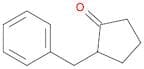
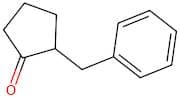
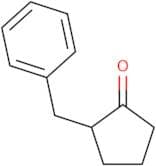
:2-benzylcyclopentanone
Description:
2-Benzylcyclopentanone is an organic compound characterized by its cyclopentanone structure with a benzyl group attached at the second carbon position. It typically appears as a colorless to pale yellow liquid with a distinctive aromatic odor. The molecular formula of 2-benzylcyclopentanone reflects its composition of carbon, hydrogen, and oxygen, and it has a relatively moderate molecular weight. This compound is known for its potential applications in organic synthesis and as a building block in the production of various pharmaceuticals and fragrances. Its chemical properties include being a ketone, which means it contains a carbonyl group (C=O) that contributes to its reactivity, particularly in nucleophilic addition reactions. Additionally, 2-benzylcyclopentanone may exhibit solubility in organic solvents, while its stability can be influenced by factors such as temperature and exposure to light. Safety data should be consulted for handling and storage, as with any chemical substance, to ensure proper precautions are taken.
Formula:C12H14O
InChI:InChI=1S/C12H14O/c13-12-8-4-7-11(12)9-10-5-2-1-3-6-10/h1-3,5-6,11H,4,7-9H2
InChI key:InChIKey=TVKMRMXVNWHKTF-UHFFFAOYSA-N
SMILES:c1ccc(cc1)CC1CCCC1=O
Synonyms:- 2-(Phenylmethyl)cyclopentanone
- 2-Benzylcyclopentan-1-one
- 2-Benzylcyclopentanon
- Cyclopentanone, 2-(Phenylmethyl)-
- Cyclopentanone, 2-benzyl-
Sort by
Purity (%)
0
100
|
0
|
50
|
90
|
95
|
100
Found 3 products.
Cyclopentanone, 2-(phenylmethyl)-
CAS:Formula:C12H14OPurity:95%Color and Shape:LiquidMolecular weight:174.23902-Benzylcyclopentanone
CAS:Loxoprofen sodium is a nonsteroidal anti-inflammatory drug that has been shown to inhibit the production of prostaglandins. 2-Benzylcyclopentanone is a natural toxin found in plants, which can be extracted from the seeds of plants like alfalfa and parsley. It is used as an intermediate for the synthesis of loxoprofen sodium. The toxic effects of 2-benzylcyclopentanone are due to its ability to inhibit membrane conductance by binding to amines and chloride ions. In high concentrations, it can lead to homochiral molecules and induce loxoprofen sodium formation.
Formula:C12H14OPurity:Min. 95%Molecular weight:174.24 g/mol