CAS 28785-06-0
:4-Propylbenzaldehyde
Description:
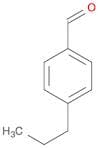
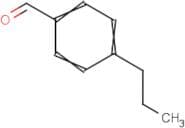
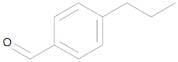
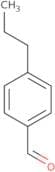
4-Propylbenzaldehyde, also known as p-propylbenzaldehyde, is an aromatic aldehyde characterized by a propyl group attached to the para position of a benzaldehyde ring. Its molecular formula is C10H12O, indicating the presence of ten carbon atoms, twelve hydrogen atoms, and one oxygen atom. This compound typically appears as a colorless to pale yellow liquid with a distinct almond-like odor, which is common among aldehydes. It has a relatively low boiling point and is soluble in organic solvents, but only slightly soluble in water due to its hydrophobic nature. 4-Propylbenzaldehyde is used in various applications, including as a flavoring agent and in the synthesis of other organic compounds. Its reactivity is typical of aldehydes, allowing it to participate in various chemical reactions, such as oxidation and condensation. Safety precautions should be taken when handling this substance, as it may cause irritation to the skin and eyes. Proper storage in a cool, well-ventilated area is recommended to maintain its stability.
Formula:C10H12O
InChI:InChI=1S/C10H12O/c1-2-3-9-4-6-10(8-11)7-5-9/h4-8H,2-3H2,1H3
InChI key:InChIKey=MAUCRURSQMOFGV-UHFFFAOYSA-N
SMILES:C(CC)C1=CC=C(C=O)C=C1
Synonyms:- 4-(n-Propyl)benzaldehyde
- 4-N-Propylbenzaldehyde
- 4-Propylbenzaldehyd
- Benzaldehyde, 4-propyl-
- Benzaldehyde, p-propyl-
- Brn 2206736
- [4-Propylphenyl]methanone
- p-Propylbenzaldehyde
- 2-07-00-00246 (Beilstein Handbook Reference)
- 4-Propylbenzaldehyde
Sort by
Purity (%)
0
100
|
0
|
50
|
90
|
95
|
100
Found 5 products.
Ref: IN-DA002WGM
1g34.00€5g66.00€10g124.00€25g198.00€50g273.00€100g670.00€250gTo inquire500gTo inquire100mg24.00€250mg26.00€4-N-Propylbenzaldehyde
CAS:Controlled ProductFormula:C10H12OColor and Shape:NeatMolecular weight:148.20174-n-Propylbenzaldehyde
CAS:4-n-Propylbenzaldehyde is a chemical compound that belongs to the group of aromatic aldehydes. It is used in the production of other chemicals, such as pharmaceuticals and fragrances. 4-n-Propylbenzaldehyde has been shown to be genotoxic, causing DNA damage and mutating genes. This chemical also has an inhibitory effect on cancer cells, which may be due to its ability to interfere with histone deacetylase activity. The genotoxic potential of this substance is considered low based on its lack of genotoxicity in vitro and in vivo. This compound does not have any structural formula for the corresponding metal complex.
Formula:C10H12OPurity:Min. 98 Area-%Color and Shape:Colorless Clear LiquidMolecular weight:148.2 g/mol