CAS 288-35-7
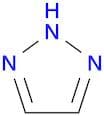
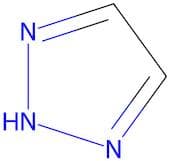
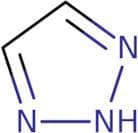
:2H-1,2,3-Triazole
Description:
2H-1,2,3-Triazole is a five-membered heterocyclic compound characterized by its unique ring structure containing two nitrogen atoms and three carbon atoms. It is a colorless to light yellow solid at room temperature, exhibiting a melting point that varies depending on purity and form. This compound is known for its stability and relatively low reactivity, making it useful in various applications, including pharmaceuticals, agrochemicals, and as a ligand in coordination chemistry. 2H-1,2,3-Triazole can participate in hydrogen bonding due to the presence of nitrogen atoms, which enhances its solubility in polar solvents. It is also recognized for its ability to form stable complexes with metal ions, which is valuable in catalysis and material science. Additionally, 2H-1,2,3-triazole derivatives have been studied for their potential biological activities, including antimicrobial and antifungal properties. Its CAS number, 288-35-7, is used for identification in chemical databases and regulatory contexts. Overall, 2H-1,2,3-triazole is a versatile compound with significant importance in both research and industrial applications.
Formula:C2H3N3
InChI:InChI=1S/C2H3N3/c1-2-4-5-3-1/h1-2H,(H,3,4,5)
InChI key:InChIKey=QWENRTYMTSOGBR-UHFFFAOYSA-N
SMILES:C=1C=NNN1
Synonyms:- 2,5-Diazapyrrole
- 2H-1,2,3-Triazole
- 2H-Triazole
- Osotriazole
Sort by
Purity (%)
0
100
|
0
|
50
|
90
|
95
|
100
Found 6 products.
2H-1,2,3-Triazole
CAS:2H-1,2,3-Triazole is a drug that belongs to the class of antiretroviral drugs. It has been shown to bind to Toll-like receptor 4 (TLR4) and inhibit HIV replication in vitro. 2H-1,2,3-Triazole is used as part of an active antiretroviral therapy for postprandial blood glucose control and for congestive heart failure. In addition, it inhibits the production of proinflammatory cytokines by binding to toll-like receptor 4 (TLR4) which is expressed on macrophages. 2H-1,2,3-Triazole can also be used as an active analogue for coumarin derivatives such as warfarin and dicoumarol. The conformational properties of this drug are similar to those of coumarin derivatives and it binds to the same site on the enzyme as these drugs do. This binding prevents the formation of anFormula:C2H3N3Purity:Min. 95%Molecular weight:69.07 g/mol