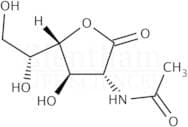
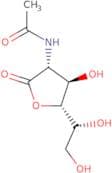
CAS 28876-38-2
:2-acetamido-2-deoxy-D-galactonic acid*1,4-lactone
Description:
2-Acetamido-2-deoxy-D-galactonic acid 1,4-lactone, with the CAS number 28876-38-2, is a derivative of galactose and belongs to the class of amino sugars. This compound features an acetamido group, which contributes to its biological activity and solubility properties. The lactone structure indicates that it has undergone intramolecular esterification, which can influence its reactivity and stability. Typically, compounds like this are characterized by their ability to participate in various biochemical processes, including those related to glycoprotein synthesis and cellular signaling. The presence of the acetamido group enhances its potential as a substrate or inhibitor in enzymatic reactions. Additionally, this compound may exhibit specific stereochemistry, which is crucial for its interaction with biological macromolecules. Its solubility in water and other solvents can vary, affecting its application in research and industry. Overall, 2-acetamido-2-deoxy-D-galactonic acid 1,4-lactone is significant in biochemical research, particularly in studies related to carbohydrate chemistry and glycobiology.
Formula:C8H13NO6
Sort by
Purity (%)
0
100
|
0
|
50
|
90
|
95
|
100
Found 3 products.
D-Galactonic acid, 2-(acetylamino)-2-deoxy-, γ-lactone
CAS:Formula:C8H13NO6Color and Shape:SolidMolecular weight:219.19192-Acetamido-2-deoxy-D-galactono-1,4-lactone
CAS:2-Acetamido-2-deoxy-D-galactono-1,4-lactone is a trifluoroacetate analogue of 2-acetamido-2,3,4,5,6-pentafluorobenzonitrile. It has been shown to be an inhibitor of the synthesis of pyrimidine nucleotides in calf thymus DNA. The lactone ring structure is responsible for the antimicrobial activity of this compound. Sodium borohydride converts the compound into a phenylhydrazone derivative and formazans are formed during this process. This reaction is indicative of the presence of pentavalent nitrogen atoms in the molecule. The shift in position of the formazan band on paper chromatography indicates that this compound has two different forms: one with a double bond and one with a triple bond between carbons 3 and 4. The five membered ring structure is stabilized by two carbon atoms (CFormula:C8H13NO6Purity:Min. 95%Color and Shape:SolidMolecular weight:219.19 g/mol