CAS 29049-22-7
:2'-deoxyxanthosine
Description:
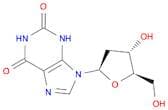
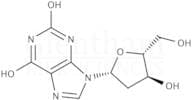
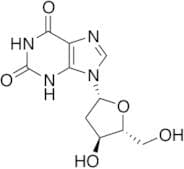
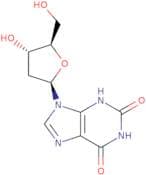
2'-Deoxyxanthosine is a nucleoside analog characterized by its structure, which consists of a xanthine base linked to a deoxyribose sugar. It is a derivative of xanthine, where the ribose sugar is in the 2'-deoxy form, meaning it lacks an oxygen atom at the 2' position of the ribose ring. This compound is notable for its role in nucleic acid metabolism and can be involved in various biochemical pathways, including those related to purine metabolism. 2'-Deoxyxanthosine can be phosphorylated to form nucleotide derivatives, which may participate in cellular processes such as DNA synthesis and repair. Its CAS number, 29049-22-7, is a unique identifier that facilitates the cataloging and retrieval of information about this substance in chemical databases. The compound's properties, such as solubility and stability, can vary depending on environmental conditions, making it of interest in both research and potential therapeutic applications.
Formula:C10H12N4O5
InChI:InChI=1/C10H12N4O5/c15-2-5-4(16)1-6(19-5)14-3-11-7-8(14)12-10(18)13-9(7)17/h3-6,15-16H,1-2H2,(H2,12,13,17,18)/t4-,5+,6+/m0/s1
Synonyms:- Xanthosine, 2'-Deoxy-
Sort by
Purity (%)
0
100
|
0
|
50
|
90
|
95
|
100
Found 4 products.
9-((2R,4S,5R)-4-Hydroxy-5-(hydroxymethyl)tetrahydrofuran-2-yl)-9H-purine-2,6-diol
CAS:Formula:C10H12N4O5Color and Shape:SolidMolecular weight:268.22612''-Deoxyxanthosine
CAS:Formula:C10H12N4O5Purity:≥ 98.0%Color and Shape:White to off-white crystalline powderMolecular weight:268.232'-Deoxyxanthosine
CAS:Controlled ProductFormula:C10H12N4O5Color and Shape:NeatMolecular weight:268.232'-Deoxyxanthosine
CAS:Controlled Product2'-Deoxyxanthosine is a chemical compound with biochemical properties that can be used as a pharmaceutical drug. It is a nucleoside analogue that interferes with DNA synthesis. 2'-Deoxyxanthosine inhibits the enzyme ribonucleotide reductase, which converts ribonucleotides to deoxyribonucleotides, and prevents the formation of DNA in cells. This drug is also known to have anti-tumor effects, including angiogenesis inhibition and cytostatic activity. The reaction mechanism of 2'-deoxyxanthosine involves nitrous acid, which reacts with the 2' hydroxyl group of xanthosine to form the nitroso intermediate and then reacts with oxygen to produce nitrite and hydrogen peroxide. The final step in this process is the cleavage of xanthosine by nitrite into xanthine and oxalate. This drug has been shown to be reactive at neutral pH conditionsFormula:C10H12N4O5Purity:Min. 95%Color and Shape:White Off-White PowderMolecular weight:268.23 g/mol