CAS 29074-04-2
:b-D-Glucopyranoside,1,1-dimethylethyl
Description:
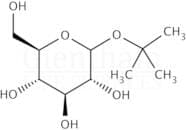
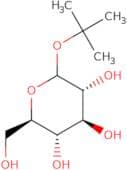
β-D-Glucopyranoside, 1,1-dimethylethyl (CAS 29074-04-2) is a glycoside derived from glucose, characterized by the presence of a glucopyranosyl moiety linked to a tert-butyl group. This compound typically appears as a white to off-white solid and is soluble in polar solvents such as water and alcohols, owing to the hydrophilic nature of the glucopyranoside structure. The tert-butyl group enhances its lipophilicity, which can influence its biological activity and interactions. β-D-Glucopyranoside derivatives are often studied for their potential applications in pharmaceuticals, food science, and biochemistry, particularly due to their role in glycosylation reactions and as intermediates in the synthesis of more complex molecules. The compound may exhibit various biological activities, including antioxidant properties, and can serve as a substrate for enzymatic reactions involving glycosidases. As with many glycosides, it is important to consider its stability, reactivity, and potential for hydrolysis under different conditions when evaluating its applications.
Formula:C10H20O6
Synonyms:- Glucopyranoside,tert-butyl, b-D-(7CI,8CI)
- tert-Butyl b-D-glucopyranoside
Sort by
Purity (%)
0
100
|
0
|
50
|
90
|
95
|
100
Found 2 products.
tert-Butyl β-D-glucopyranoside
CAS:tert-Butyl b-D-glucopyranoside is a monomer that belongs to the class of acrylic acid ester. It is used in polymer synthesis, as a photoinitiator and as a light stabilizer for polymers. The compound is resistant to heat and has a high degree of light transmittance. Tert-butyl b-D-glucopyranoside is soluble in chloroform and can be found in carbon tetrachloride solution with a transmittance of up to 83%. This compound can be used as an indexing agent for silicon wafers because it produces protrusions when immersed in chloroform.Formula:C10H20O6Purity:Min. 95%Color and Shape:PowderMolecular weight:236.26 g/mol