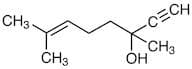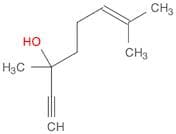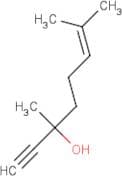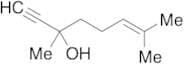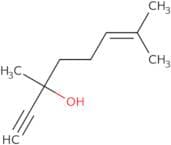
CAS 29171-20-8
:Dehydrolinalool
- (E)-3,7-Dimethyl-1,5,7-octatrien-3-ol
- 2,6-Dimethyl-2-octen-7-yn-6-ol
- 2-Dehydrolinalool
- 3,7-Dimethyl-3-hydroxy-6-octen-1-yne
- 3,7-Dimethyl-6-octen-1-yn-3-ol
- 3-Hydroxy-3,7-dimethyl-oct-6-en-1-yne
- 3-Laurylthiopropionate
- 6-Octen-1-yn-3-ol, 3,7-dimethyl-
- Ai3-25065
- Antioxidant 412S
- Dehydro-β-linalool
- Dehydrolinalool
- Linalool, dehydro-
- Linalool, dehydro- (6CI)
- Pentaerythritol Beta-Laurylthiopropionate
- Pentaerythritol tetra(3-dodecylthiopropionate)
- Sumilizer TP-D
- Thanox412S
- β-Linalool, dehydro-
- See more synonyms
(±)-Dehydrolinalool
CAS:Formula:C10H16OPurity:>98.0%(GC)Color and Shape:Colorless to Light yellow to Light orange clear liquidMolecular weight:152.246-Octen-1-yn-3-ol, 3,7-dimethyl-
CAS:Formula:C10H16OPurity:97%Color and Shape:LiquidMolecular weight:152.23343,7-Dimethyloct-6-en-1-yn-3-ol
CAS:3,7-Dimethyloct-6-en-1-yn-3-olFormula:C10H16OPurity:99%Color and Shape: clear. colourless oilMolecular weight:152.23g/mol3,7-Dimethyloct-6-en-1-yn-3-ol
CAS:Formula:C10H16OPurity:95%Color and Shape:SolidMolecular weight:152.2373,7-Dimethyl-6-octen-1-yn-3-ol
CAS:Controlled ProductApplications 3,7-Dimethyl-6-octen-1-yn-3-ol is a useful synthetic intermediate in the synthesis of Methylisopseudoionone (M314920); a derivative of Ionone (I731275) which is an aroma compound found in essential oils such as rose oil, and thus can be used in the perfumery industry.
References Susanne, B. et al.: J. Exp. Botany, 61, 2967 (2010); Hu, H. et al.: Arch. Pham. res., 32, 699 (2009)Formula:C10H16OColor and Shape:NeatMolecular weight:152.233,7-Dimethyl-6-octen-1-yn-3-ol
CAS:3,7-Dimethyl-6-octen-1-yn-3-ol (linalool) is a naturally occurring chemical in plants. It has been shown to inhibit the growth of hepatitis C virus and is used as a chemical intermediate. Linalool is hydrogenated by using a catalyst, such as phosphotungstic acid. The process of hydrogenation can be optimized through kinetic studies. This compound is also used in the synthesis of ethylene diamine, which is used in particle activation energies for pleural fluid.
Formula:C10H16OPurity:Min. 95%Molecular weight:152.23 g/mol