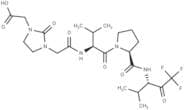
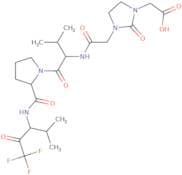
CAS 291778-77-3
:1-[N-[2-[3-(Carboxymethyl)-2-oxoimidazolidin-1-yl]acetyl]-L-valyl-L-prolinamide N-[3,3,3-trifluoro-1(S)-isopropyl-2-oxopropyl]amide
Description:
The chemical substance known as "1-[N-[2-[3-(Carboxymethyl)-2-oxoimidazolidin-1-yl]acetyl]-L-valyl-L-prolinamide N-[3,3,3-trifluoro-1(S)-isopropyl-2-oxopropyl]amide" with CAS number 291778-77-3 is a complex organic compound characterized by its intricate structure, which includes multiple functional groups such as amides, imidazolidinones, and carboxylic acids. This compound features a chiral center, contributing to its stereochemistry, which may influence its biological activity and interactions. The presence of trifluoromethyl groups suggests potential lipophilicity, which can affect its solubility and permeability in biological systems. Additionally, the imidazolidinone moiety may impart unique reactivity and stability characteristics. Such compounds are often investigated for their potential therapeutic applications, particularly in medicinal chemistry, due to their ability to interact with biological targets. Overall, the structural complexity and functional diversity of this substance make it a subject of interest in both synthetic and pharmaceutical chemistry.
Formula:C23H34F3N5O7
Synonyms:- Ae-3763
Sort by
Purity (%)
0
100
|
0
|
50
|
90
|
95
|
100
Found 2 products.
AE-3763
CAS:AE-3763 is a peptide-based human neutrophil elastase inhibitor (IC50: 29 nM).Formula:C23H34F3N5O7Purity:98%Color and Shape:SolidMolecular weight:549.54AE-3763
CAS:AE-3763 is an inhibitor of kinases that has shown promise in the treatment of cancer. It is a small molecule that selectively inhibits the activity of certain kinases, which are enzymes involved in cell signaling pathways. AE-3763 has been found to induce apoptosis (programmed cell death) in cancer cells by blocking the activity of specific kinases. This compound has also been shown to inhibit tumor growth in animal models and to have anticancer effects in human cancer cell lines. AE-3763 can be detected in urine and has been studied extensively for its potential therapeutic use against various types of cancer, including breast, lung, and colon cancers. The compound is derived from d-xylose and was first identified as a potent kinase inhibitor by Chinese researchers.Formula:C23H34F3N5O7Purity:Min. 95%Molecular weight:549.5 g/mol