CAS 292-46-6
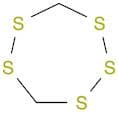
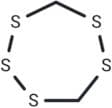
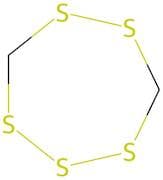
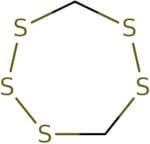
:1,2,3,5,6-pentathiepane
Description:
1,2,3,5,6-Pentathiepane is a heterocyclic compound characterized by a five-membered ring containing five sulfur atoms. This compound is notable for its unique structure, which contributes to its chemical properties and reactivity. It is a colorless to yellow liquid at room temperature and has a distinctive odor. The presence of multiple sulfur atoms in the ring structure imparts significant reactivity, particularly in nucleophilic and electrophilic reactions. Pentathiepane is relatively unstable compared to other sulfur-containing compounds, and it can undergo polymerization or decomposition under certain conditions. Its solubility in organic solvents makes it useful in various chemical applications, including research in organosulfur chemistry. Additionally, due to its unique properties, it may have potential applications in materials science and as a precursor for synthesizing other sulfur-containing compounds. However, handling this compound requires caution due to its reactivity and potential toxicity.
Formula:C2H4S5
InChI:InChI=1S/C2H4S5/c1-3-4-2-6-7-5-1/h1-2H2
InChI key:InChIKey=DZKOKXZNCDGVRY-UHFFFAOYSA-N
SMILES:C1SSCSSS1
Synonyms:- 1,2,3,5,6-Pentasulfur-cylloheptane
- Lenthionin
- Lenthionine
- NSC 291119
- Shiitake
Sort by
Purity (%)
0
100
|
0
|
50
|
90
|
95
|
100
Found 5 products.
Lenthionine
CAS:Lenthionine (1,2,3,5,6-Pentathiepane) is a marine derived natural products found in Chondria acrorhizophora.Formula:C2H4S5Purity:97.32%Color and Shape:SolidMolecular weight:188.381,2,3,5,6-Pentathiepane
CAS:1,2,3,5,6-Pentathiepane is a fatty acid that is the product of the soybean lipoxygenase. The olefinic bond in 1,2,3,5,6-pentathiepane is responsible for its conformational properties. The length of the side chain determines whether or not it has biological activity. 1,2,3,5,6-Pentathiepane can be used as an experimental model to study the effects of acidic pH on lenthionine production. It is also used in solid phase microextraction analysis to measure tissue culture conditions and to study the biological properties of glutamate dehydrogenase.Formula:C2H4S5Purity:Min. 95%Color and Shape:White PowderMolecular weight:188.38 g/mol