CAS 29334-18-7
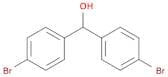
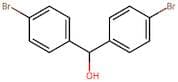
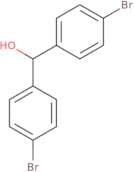
:4-Bromo-α-(4-bromophenyl)benzenemethanol
Description:
4-Bromo-α-(4-bromophenyl)benzenemethanol, with the CAS number 29334-18-7, is an organic compound characterized by its structure, which includes a benzene ring substituted with bromine atoms and a hydroxymethyl group. This compound features two bromine substituents, which enhance its reactivity and influence its physical properties, such as solubility and melting point. The presence of the hydroxymethyl group (-CH2OH) contributes to its potential as a precursor in organic synthesis and may also affect its biological activity. Typically, compounds with multiple halogen substituents exhibit increased lipophilicity, which can impact their interaction with biological systems. The compound may be used in various applications, including pharmaceuticals, agrochemicals, and materials science. Its synthesis and handling require careful consideration of safety protocols due to the presence of bromine, a halogen that can pose environmental and health risks. Overall, 4-Bromo-α-(4-bromophenyl)benzenemethanol is a notable compound in the field of organic chemistry, with potential utility in diverse chemical applications.
Formula:C13H10Br2O
InChI:InChI=1S/C13H10Br2O/c14-11-5-1-9(2-6-11)13(16)10-3-7-12(15)8-4-10/h1-8,13,16H
InChI key:InChIKey=PDQRNCTWDZPBGQ-UHFFFAOYSA-N
SMILES:C(O)(C1=CC=C(Br)C=C1)C2=CC=C(Br)C=C2
Synonyms:- 4,4′-Dibromobenzhydrol
- 4-Bromo-α-(4-bromophenyl)benzenemethanol
- Benzenemethanol, 4-Bromo-Alpha-(4-Bromophenyl)-
- Benzenemethanol, 4-bromo-α-(4-bromophenyl)-
- Benzhydrol, 4,4′-dibromo-
- Methanol, bis(4-bromophenyl)-
- Bis(4-bromophenyl)methanol
Sort by
Purity (%)
0
100
|
0
|
50
|
90
|
95
|
100
Found 4 products.
Benzenemethanol, 4-bromo-α-(4-bromophenyl)-
CAS:Formula:C13H10Br2OPurity:98%Molecular weight:342.02594,4'-Dibromobenzhydrol
CAS:4,4'-Dibromobenzhydrol (DBH) is a bidentate ligand that can be synthesised in high yields. It has been shown to bind to cancer cells with high affinity and specificity. DBH has also been used as a scaffold for the synthesis of supramolecular architectures, which have shown to be cytotoxic to cancer cells and also provide an improved understanding of the binding mechanism. This compound has been tested for toxicity in animal studies and found to have low toxicity.
Formula:C13H10Br2OPurity:Min. 95%Color and Shape:White PowderMolecular weight:342.03 g/mol