CAS 29346-51-8
:1-ethyl-3-(2-hydroxyethyl)urea
Description:
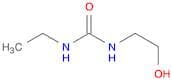
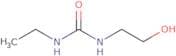
1-Ethyl-3-(2-hydroxyethyl)urea is an organic compound characterized by its urea functional group, which is modified by ethyl and hydroxyethyl substituents. This compound typically appears as a white to off-white solid or crystalline substance. It is soluble in water due to the presence of the hydroxyethyl group, which enhances its hydrophilicity. The molecular structure includes an ethyl group attached to the nitrogen atom of the urea, while the hydroxyethyl group is connected to the carbon atom of the urea moiety, contributing to its unique properties. This compound may exhibit hydrogen bonding capabilities due to the hydroxyl group, influencing its interactions in various chemical environments. It is often studied for its potential applications in pharmaceuticals, agriculture, and as a chemical intermediate. Safety data sheets should be consulted for handling and storage guidelines, as with any chemical substance, to ensure proper safety measures are taken during use.
Formula:C5H12N2O2
InChI:InChI=1/C5H12N2O2/c1-2-6-5(9)7-3-4-8/h8H,2-4H2,1H3,(H2,6,7,9)
SMILES:CCN=C(NCCO)O
Sort by
Purity (%)
0
100
|
0
|
50
|
90
|
95
|
100
Found 2 products.
1-Ethyl-3-(2-hydroxyethyl)urea
CAS:1-Ethyl-3-(2-hydroxyethyl)urea is a chemical compound that is an equimolar mixture of two isomers, 1-ethyl-3-(2-hydroxyethyl)urea and 3-(2-hydroxyethyl)-1-methylurea. It has been shown to induce death in tumor cells, but not in normal cells. The molecular targets for this compound are the mitochondria and the DNA, which are essential for cell growth and division. This drug also has carcinogenic properties, meaning that it can cause cancer. In animal studies, 1-ethyl-3-(2-hydroxyethyl)urea has been shown to cause thyroid tumors and astrocytomas (brain tumors). In addition, this drug causes hepatocellular carcinoma in rats and gliomas (brain tumors) in animals.Formula:C5H12N2O2Purity:Min. 95%Molecular weight:132.16 g/mol