CAS 29421-75-8
:2-Thiophenecarboxaldehyde,4-bromo-5-methyl-
Description:
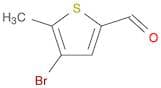
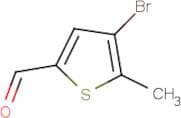
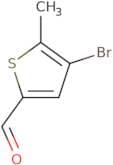
2-Thiophenecarboxaldehyde, 4-bromo-5-methyl- is an organic compound characterized by its thiophene ring structure, which is a five-membered aromatic heterocycle containing sulfur. The presence of a carboxaldehyde functional group (-CHO) indicates that it can participate in various chemical reactions, such as nucleophilic addition and condensation. The bromine atom at the 4-position and the methyl group at the 5-position on the thiophene ring contribute to its reactivity and influence its physical properties, such as solubility and boiling point. This compound is typically a colorless to pale yellow liquid and is used in organic synthesis, particularly in the development of pharmaceuticals and agrochemicals. Its unique structure allows for potential applications in materials science and as a building block in the synthesis of more complex molecules. As with many organic compounds, safety precautions should be taken when handling it, as it may pose health risks if inhaled or ingested.
Formula:C6H5BrOS
Synonyms:- 4-Bromo-5-methylthiophene-2-carboxaldehyde
Sort by
Purity (%)
0
100
|
0
|
50
|
90
|
95
|
100
Found 4 products.
4-Bromo-5-methyl-2-thiophenecarbaldehyde
CAS:Formula:C6H5BrOSPurity:97%Color and Shape:SolidMolecular weight:205.07234-Bromo-5-methylthiophene-2-carbaldehyde
CAS:4-Bromo-5-methylthiophene-2-carbaldehydeFormula:C6H5BrOSPurity:≥95%Color and Shape: beige powderMolecular weight:205.07g/mol4-Bromo-5-methylthiophene-2-carboxaldehyde
CAS:Formula:C6H5BrOSPurity:97%Color and Shape:SolidMolecular weight:205.074-Bromo-5-methylthiophene-2-carboxaldehyde
CAS:4-Bromo-5-methylthiophene-2-carboxaldehyde (BMTCA) is a chemical that is synthesised by the reaction of ethylene with irradiation. It has been shown to have photochromic properties and can be used as an alternative to 4,4'-dithiodimorpholine (DIMO). BMTCA is hydrophilic and can be used for the synthesis of homologues. It also undergoes an x-ray structure analysis, yielding information on its physical properties and how it reacts with other chemicals. The process of digitalization allows for the conversion of analog signals into digital signals. This process uses a shift register, which is a device that stores data in sequential memory cells and outputs them on a single line. The diels–alder reaction is a chemical reaction between two unsaturated compounds to form 1,3-dienes or 1,4-diynes. This reaction is highly useful because it canFormula:C6H5BrOSPurity:Min. 95%Molecular weight:205.07 g/mol