CAS 29458-38-6
:2,4(1H,3H)-Pyrimidinedione,6-methoxy-
Description:
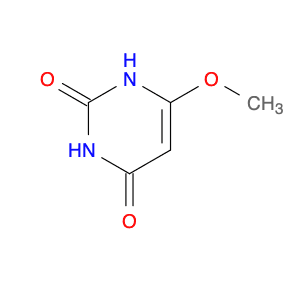
2,4(1H,3H)-Pyrimidinedione, 6-methoxy- is an organic compound characterized by its pyrimidine ring structure, which is a six-membered aromatic ring containing two nitrogen atoms at positions 1 and 3. This compound features two carbonyl groups (C=O) at positions 2 and 4, contributing to its diketone nature, and a methoxy group (-OCH3) at position 6, which enhances its solubility in organic solvents. It is typically a crystalline solid and may exhibit properties such as moderate stability under standard conditions. The presence of the methoxy group can influence its reactivity and interaction with other chemical species, potentially making it a candidate for various applications in pharmaceuticals or as a building block in organic synthesis. Its molecular structure allows for hydrogen bonding, which can affect its physical properties, such as melting point and solubility. As with many organic compounds, safety data should be consulted for handling and storage, as it may pose health risks if not managed properly.
Formula:C5H6N2O3
Synonyms:- Uracil,6-methoxy- (8CI)
- 2,4-Dihydroxy-6-methoxypyrimidine
- 6-Methoxy-2,4(1H,3H)-pyrimidinedione
- 6-Methoxyuracil
Sort by
Purity (%)
0
100
|
0
|
50
|
90
|
95
|
100
Found 4 products.
2,4(1H,3H)-Pyrimidinedione, 6-methoxy-
CAS:Formula:C5H6N2O3Purity:98%Color and Shape:SolidMolecular weight:142.11276-Methoxypyrimidine-2,4(1H,3H)-dione
CAS:Controlled Product6-Methoxypyrimidine-2,4(1H,3H)-dione is a nucleophilic compound that is formed by the reaction of an electron with a carbon atom in an organic molecule. It is used as a reagent in organic synthesis. 6-Methoxypyrimidine-2,4(1H,3H)-dione can be synthesized from 2-amino-5-methoxybenzaldehyde and chloroacetic acid in three steps. The chloride ion reacts with the 6-methoxypyridine to form the desired product. 6-Methoxypyrimidine-2,4(1H,3H)-dione can also be used as a reagent to catalyze chemical reactions such as alkylation and allylation reactions. 6-Methoxypyrimidine-2,4(1H,3H)-dione has been shown to have barbiturate activityFormula:C5H6N2O3Purity:Min. 95%Molecular weight:142.11 g/mol