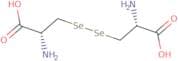
CAS 29621-88-3
:L-Selenocystine
Description:
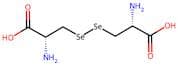
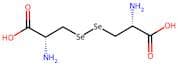
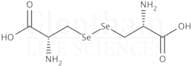
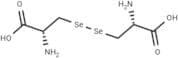
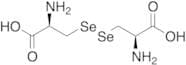
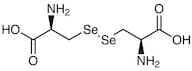
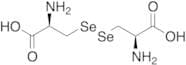
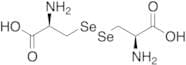
L-Selenocystine is an organoselenium compound that is a derivative of the amino acid cysteine, where the sulfur atom is replaced by selenium. It is characterized by its unique selenium-containing structure, which contributes to its biological activity and potential health benefits. L-Selenocystine is known for its antioxidant properties, which can help protect cells from oxidative stress. It plays a role in various biochemical processes, including the synthesis of selenoproteins, which are essential for maintaining cellular function and metabolism. This compound is often studied for its potential therapeutic applications, particularly in cancer research and as a dietary supplement due to its ability to influence immune response and promote overall health. Additionally, L-Selenocystine is soluble in water and exhibits stability under physiological conditions, making it a subject of interest in nutritional and pharmaceutical studies. Its CAS number, 29621-88-3, is used for identification in chemical databases and regulatory contexts.
Formula:C6H12N2O4Se2
InChI:InChI=1S/C6H12N2O4Se2/c7-3(5(9)10)1-13-14-2-4(8)6(11)12/h3-4H,1-2,7-8H2,(H,9,10)(H,11,12)/t3-,4-/m0/s1
InChI key:InChIKey=JULROCUWKLNBSN-IMJSIDKUSA-N
SMILES:[C@H](C[Se][Se]C[C@@H](C(O)=O)N)(C(O)=O)N
Synonyms:- 3,3′-Diselenobis[<span class="text-smallcaps">L</span>-alanine]
- <span class="text-smallcaps">L</span>-Alanine, 3,3′-diselenobis-
- <span class="text-smallcaps">L</span>-Selenocystine
- Alanine, 3,3′-diselenodi-, <span class="text-smallcaps">L</span>-
- Alanine,3,3'-diselenodi-, L- (8CI)
- L-Selenocystine
- Selenocystine
- 3,3′-Diselenobis[L-alanine]
- L-Alanine, 3,3′-diselenobis-
- Alanine, 3,3′-diselenodi-, L-
Sort by
Purity (%)
0
100
|
0
|
50
|
90
|
95
|
100
Found 11 products.
L-Selenocystine monohydrate
CAS:Formula:C6H12N2O4Se2Purity:97%Color and Shape:SolidMolecular weight:334.0905Seleno-L-cystine
CAS:Formula:C6H12N2O4Se2·xH2OPurity:≥ 98.0%Color and Shape:White to yellow or yellow-brown powder or crystalsMolecular weight:334.09 (anhydrous)L-Selenocystine
CAS:L-Selenocystine (L-Selenocystine) can be used as a building block in biologically active selenol compounds.
Formula:C6H12N2O4Se2Purity:99.36%Color and Shape:SolidMolecular weight:334.09L-Selenocystine
CAS:Controlled ProductApplications L-Selenocystine is a diselenide-bridged amino acid which show chemopreventive activity against tobacco-derived nitrosamine (NNK) induced lung tumors. It causes apoptosis in A375, HepG2 and MCF7 cancer cells by inducing intracellular reactive oxygen species.
Not a dangerous good if item is equal to or less than 1g/ml and there is less than 100g/ml in the package
References Li, L., et al.: J. Biochem. Mol. Toxic., 19, 396 (2005); Chen, T., et al.: Biomed. Pharmacother., 63, 105 (2009);Formula:C6H12N2O4Se2Color and Shape:NeatMolecular weight:334.12L-Selenocystine
CAS:Formula:C6H12N2O4Se2Purity:>97.0%(T)Color and Shape:Light yellow to Brown powder to crystalMolecular weight:334.093,3'-Diselenobis-L-alanine
CAS:Controlled ProductFormula:C6H12N2O4Se2Color and Shape:NeatMolecular weight:334.09L-Selenocystine Preparation Kit
CAS:Controlled ProductFormula:C6H12N2O4Se2Color and Shape:NeatMolecular weight:334.09L-Selenocystine
CAS:L-Selenocystine is a selenium compound that is used in the treatment of animals and humans. It can be found in animal liver, although it has not been detected in human liver. L-Selenocystine inhibits bacterial enzymes by binding to 3-mercaptopropionic acid and forming a reactive intermediate. This reactive intermediate binds to the sulfur atom at the active site of the enzyme, which prevents it from performing its function. L-selenocystine also has an inhibitory effect on chain reactions in mammalian cells due to its ability to bind with the enzyme that initiates these reactions. Selenium compounds are most effective when they are administered orally because they are poorly absorbed through other routes of administration.Formula:C6H12N2O4Se2Purity:Min. 95%Color and Shape:PowderMolecular weight:334.09 g/mol